
Published: September 24, 2026. Last updated: September 24, 2026.
Quick answer: what UV printing does for an apparel brand
UV printing lets textile and apparel businesses produce their own branded hardware and packaging in-house: PU leather patches, acrylic and metal tags, buttons, badges, hangtags, PVC cards, gift boxes and hangers. A flatbed UV printer lays down full colour ink and cures it instantly with ultraviolet light, so it decorates rigid and semi-rigid items that screen printing and sublimation handle poorly. It does not replace fabric printing on the garment itself. Instead it owns everything around the garment that carries the brand. For a label or garment company that outsources these items today, moving them in-house removes minimum order quantities, cuts turnaround from days to hours, and protects margin on every single piece.
Why apparel is huge in India, but brand identity still leaks value
India runs one of the largest apparel economies on earth, and it is growing fast. According to the India Brand Equity Foundation (IBEF), the Indian textile and apparel market is projected to reach US$350 billion by 2030 at a compound annual growth rate of about 10 percent, with ready-made garments making up 44 percent of textile exports in FY25.
The sector is also a job engine. IBEF reports the industry employs over 45 million people directly and produces roughly 22,000 million garment pieces a year. Most of those garments are made by small and medium units, not giants.
Here is the quiet problem. The garment gets stitched in-house, but the items that actually build the brand, the woven-look patch, the hangtag, the branded button, the packaging box, are almost always bought from an outside vendor.
What outsourcing branded accessories really costs a garment business
Outsourcing branding items looks cheap per unit. The real cost shows up in three places that rarely reach the costing sheet.
- Minimum order quantities lock up cash. A tag or patch supplier usually wants thousands of pieces per design. A brand running many small collections ends up either overordering or waiting.
- Turnaround slows the whole line. When a design changes, the garment is ready but the tags are not. Dispatch waits on the slowest branded part.
- Margin leaks on every reprint. A colour that does not match, a wrong size, a late festival order, each one is a fresh purchase order and a fresh markup paid to someone else.
Multiply even a few rupees of avoidable spend across tens of thousands of tags a month and the leak becomes a real number. That is money that never touched your own machine.
What smart apparel buyers now expect from a brand
The pressure to personalise is not a trend, it is an expectation. McKinsey’s research on personalisation found that 71 percent of consumers expect personalised interactions from the companies they buy from, and 76 percent get frustrated when they do not get them. Brands that lead on personalisation drive around 40 percent more revenue from those activities than average performers, McKinsey reported.
For an apparel business, personalisation increasingly means short runs, named collections, co-branded capsules and quick seasonal drops. Every one of those needs branded accessories in small quantities, fast. An outsourced supply chain built for bulk cannot serve that. In-house production can.
How UV printing actually works, in plain terms
UV printing is a form of inkjet printing where the ink is dried, or set, the instant it lands. Instead of soaking in and air-drying, the ink is hit with ultraviolet light and hardens on contact through a process called UV curing. Because the ink cures rather than absorbs, it bonds to surfaces that normal printing cannot hold, and it is ready to handle straight off the bed.
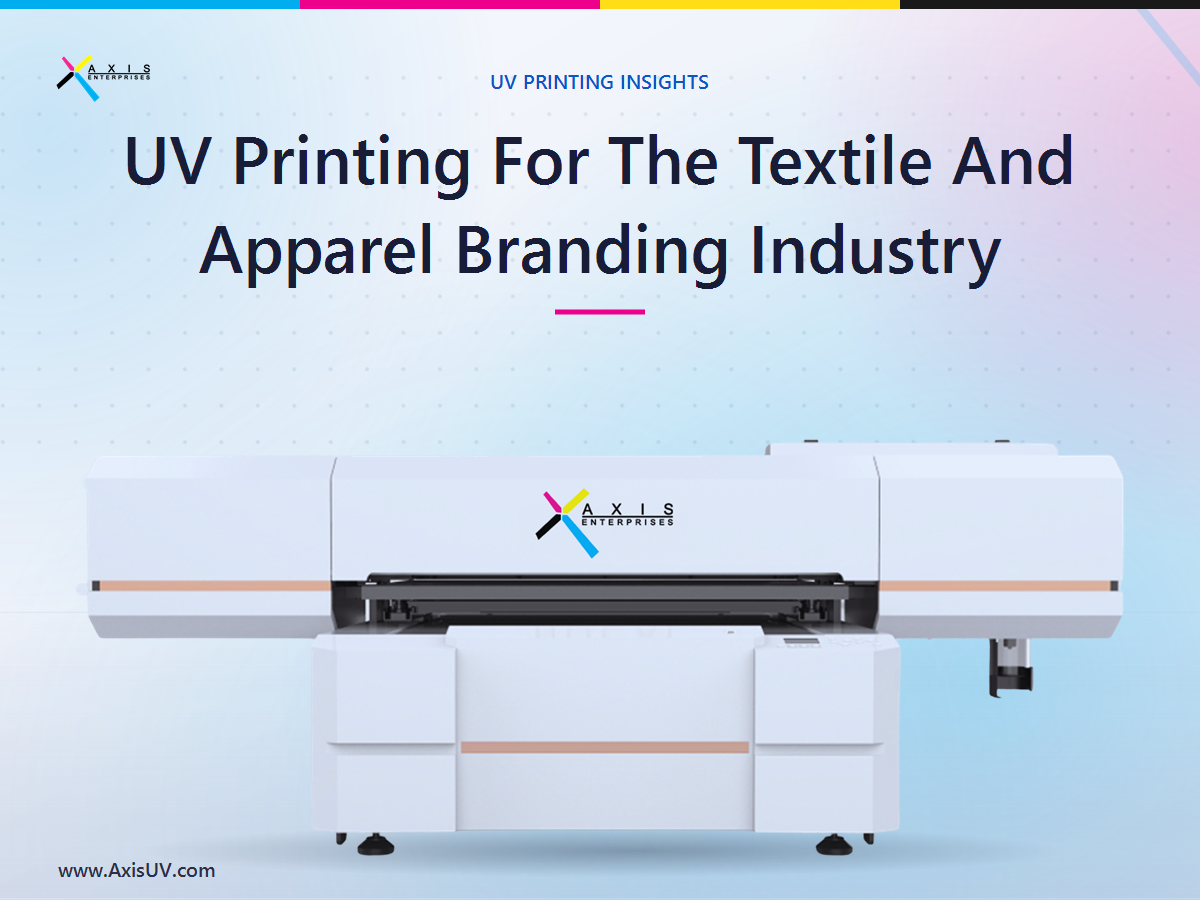
A flatbed UV printer prints onto a flat table, so you place the item, print, and lift it out fully cured. Most flatbed machines print white ink as well as colour, which is what makes a logo pop on dark leather, clear acrylic or metal. That combination, direct printing plus white plus instant cure, is exactly what apparel branding hardware needs.
Which apparel branding items can a flatbed UV printer produce?
A flatbed UV printer covers the branded hardware and packaging that sits with almost every garment. Common items include:
- PU and genuine leather patches for jeans, jackets and bags
- Acrylic, wood and metal hangtags and swing tags
- Buttons, badges, pins and zip pullers
- PVC brand cards, loyalty cards and size cards
- Rigid packaging boxes, gift boxes and mailer inserts
- Branded hangers, keyrings and promotional add-ons
The garment fabric itself is still best decorated by methods built for cloth. UV printing takes ownership of everything hard, flat or moulded that carries your name.
UV in-house versus outsourced branding: a side by side view
What to look for before you buy a UV printer for apparel branding
A UV printer is a capital purchase, and in India it attracts Goods and Services Tax, which registered businesses can usually claim as input credit. Judge the machine on total value over its life, not sticker price alone. Sensible things to check include:
- White ink and varnish capability, so logos hold on dark leather and clear acrylic and look premium.
- A bed size and jig support that match small, repeated items like tags and patches, not just large flat sheets.
- Reliable local service and spare parts, because downtime on a branding line stops dispatch.
- Proven adhesion on your real materials, tested with the correct primer, before you commit.
- Training and print profiles for the exact substrates an apparel brand uses.
This is the same discipline the broader manufacturing base is built on. Government of India figures show the micro, small and medium enterprise sector now contributes 30.1 percent of national GDP, 35.4 percent of manufacturing output and 45.73 percent of exports, with about 6.5 crore registered units as of July 2025 (Press Information Bureau). MSME Minister Jitan Ram Manjhi described the sector as “the second highest contributor to the country’s economy.” Apparel branding is one more place where owning the process, rather than renting it, compounds over time. You can read more about the sector in this overview of the textile industry in India and the role of small and medium enterprises.
A better way forward for apparel branding
Demand for UV printing is climbing on both the machine and the output side. Mordor Intelligence values the global UV printers market at US$1.02 billion in 2025, rising to US$1.58 billion by 2031 at a 7.59 percent CAGR, with Asia-Pacific already holding 38.43 percent of 2025 revenue. In India specifically, IMARC Group puts the digital printing market at US$1.50 billion in 2025, growing to US$2.94 billion by 2034. The direction is clear: more brands are pulling decoration in-house.
This is where Axis Enterprises fits. At uvprinterindia.com we help apparel and textile businesses choose flatbed UV printing machines built for exactly this work, branded patches, tags, buttons, cards and packaging, produced on your own floor with no minimum order. If you want to see the options, you can explore flatbed UV printers built for branded accessories or talk to the Axis Enterprises team about your materials.
Next step
If your garment business still buys its tags, patches and packaging from someone else, the fastest way to know whether an in-house machine pays back is to run your own numbers against a real print sample. Bring your typical monthly volumes and the materials you use, and we will help you size the right machine. You can book a free UV printing machine buying consultation to get a clear, no pressure assessment before you invest.
Frequently asked questions
Can a UV printer print on fabric and garments directly?
Not well, and that is not its job. UV printing is built for rigid and semi-rigid surfaces like leather, acrylic, metal, wood and board. For your garment brand it produces the patches, tags, buttons, cards and packaging, while all-over decoration on the cloth itself is left to methods designed for fabric.
Which apparel branding items give the best return on a UV printer?
Small, high-frequency, high-margin items pay back fastest. Leather and PU patches, hangtags, PVC brand cards and premium packaging are printed daily across collections, so bringing them in-house removes constant outsourcing and minimum order costs quickly.
Is UV printing better than screen printing for labels and tags?
For short runs and changing designs, yes. Screen printing is efficient only at very high volume of a single design because each colour needs a separate screen. A flatbed UV printer prints full colour plus white with no setup per design, so it wins on small batches, personalisation and fast turnaround.
How does printing branded accessories in-house save a garment business money?
It removes three recurring costs: the supplier margin on every order, the waste from ordering above your real need to meet minimums, and the delay that holds up dispatch. Producing on demand means you print what you ship, when you ship it.
What should an apparel brand check before buying a UV printer?
Confirm white ink capability, a bed and jig setup suited to small items, tested adhesion on your actual materials with the right primer, and dependable local service and spares. Weigh the machine on lifetime value including GST input credit, not on price alone.
Sources
- India Brand Equity Foundation (IBEF): Textile Industry and Market Growth in India
- IMARC Group: India Digital Printing Market Size and Growth 2026 to 2034
- Mordor Intelligence: UV Printers Market Size, Share and Growth Trends
- Press Information Bureau, Government of India: MSME sector share of GDP, manufacturing and exports (July 2025)
- McKinsey and Company: The value of getting personalization right or wrong is multiplying