
Published: November 20, 2026
Quick answer: what is variable data printing on a UV machine, and why does it matter now?
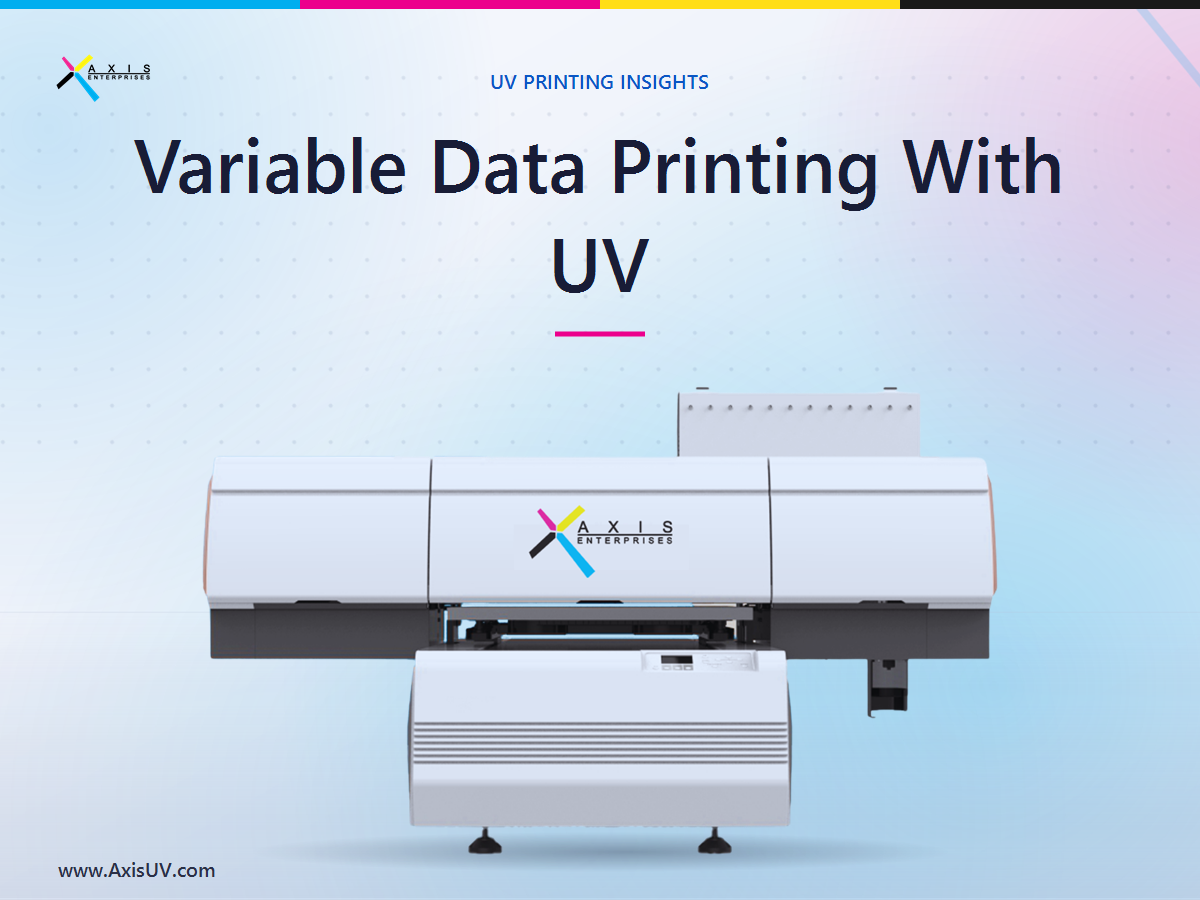
Variable data printing (VDP) means every item in a print run can carry a different serial number, QR code, barcode, name or batch code without stopping the machine. On a UV flatbed or UV DTF system, that lets an Indian print shop or manufacturer print unique identifiers directly onto rigid products, labels, cards and packaging, not just paper. It matters now because regulators and brand owners increasingly demand per-unit traceability. According to Fortune Business Insights, the global market for variable data printing labels was valued at USD 24.28 billion in 2025 and is projected to reach USD 77.90 billion by 2034. For a small Indian business, VDP is the difference between quoting a plain decoration job and winning a serialized, repeat-order contract at a higher margin.
Why most custom-print work leaks margin
Most print shops still sell decoration: a logo, a design, a finish. Decoration is easy to copy and easy to beat on price. The moment a competitor quotes a few rupees lower, the job moves. This is the quiet trap that keeps job-work shops stuck on thin margins year after year.
The data behind the trap is worth facing directly. The OECD estimates that international trade in counterfeit and pirated goods reached USD 464 billion in 2019, roughly 2.5% of world trade. Fakes now appear across ordinary consumer goods, spare parts, cosmetics, electronics and medicines. Every one of those fakes exists because the genuine product could not prove, at the unit level, that it was genuine.
That gap is the opportunity. When a brand cannot tell its own product apart from a copy, it will pay for a partner who can print a unique, scannable identity onto each unit. A plain decorator cannot do that. A shop running variable data printing can.
What this means for a small print shop or manufacturer in India
For Indian SMBs, the shift from decoration to identification is no longer optional in regulated categories, it is law. India built its first domestic QR-code drug traceability framework by creating Schedule H2 under the Drugs Rules, 1945.
The timeline is specific. A reply in the Rajya Sabha records that the Drugs Rules, 1945 were amended through a notification dated 17 November 2022, which came into force from 1 August 2023, requiring the top 300 drug brands to carry a barcode or QR code on their packaging. That mandate has since widened. The Regulatory Affairs Professionals Society reports that India has expanded the mandatory QR-code traceability requirement beyond the original top 300 brands, with a phased transition now reaching further categories of essential and high-risk medicines.
Pharmaceuticals are only the leading edge. The same buyer pressure (prove this unit is real, track where it went) is spreading into FMCG, industrial parts, electronics, agro-inputs and premium consumer goods. Fortune Business Insights notes that Asia-Pacific accounted for about 26% of the global VDP labels market in 2025 and names India among the fastest-growing markets in the region. A shop that can serialize is positioned for that demand. A shop that only decorates is not.
How does variable data printing actually work on a UV printer?
VDP connects a data source to the print job, so the machine pulls a new value for each piece while the static design stays fixed. You design the layout once, mark the fields that change (serial number, QR code, batch, name, date), and link those fields to a spreadsheet or database. The printer then prints item 1 with the first record, item 2 with the second, and so on, with no manual file-swapping between pieces.
On a UV system, two capabilities make this valuable beyond paper:
- Direct-to-substrate printing. UV curing hardens the ink instantly with ultraviolet light, so the code bonds to glass, metal, acrylic, wood, PVC and coated surfaces, not just paper labels.
- High-resolution small codes. A readable QR code or data-matrix must print cleanly at small sizes. UV inkjet lays down sharp, high-contrast marks that scanners read reliably on the first pass.
The practical result: one machine can decorate a product and give it a unique, scannable identity in a single pass, directly on the finished item.
What can you actually print with variable data on a UV machine?
Anything that benefits from being uniquely identifiable per unit. Common revenue applications for Indian SMBs include:
- Serialized product codes for anti-counterfeiting, so each unit carries a unique number a buyer can verify.
- QR codes that link a physical product to a landing page, warranty registration, authentication check or reorder flow.
- Batch and date codes printed directly on rigid packaging, bottles, caps and industrial parts.
- Sequential asset tags and nameplates for equipment, where every plate shows a different asset ID.
- Personalized gifting and corporate orders, where each piece carries a different name or message with no minimum quantity.
- Numbered ID, membership and event cards printed and serialized in one run.
Every one of these is a job a plain decorator has to refuse or outsource. Each is a reason a brand chooses, and keeps choosing, the shop that can do it in-house.
What smart buyers should look for in a UV printer for variable data work
Not every UV printer handles VDP well. The capability lives in the software and the print quality, not just the hardware badge. Before buying, judge a machine against criteria that actually decide whether serialized work is profitable:
- RIP software with native variable data support. The raster image processor must accept a database or spreadsheet and merge records without rebuilding the file for every piece. Ask to see it run a live serialized job, not a slideshow.
- Verified small-code readability. Print a real QR code and data-matrix at production size, then scan it with an ordinary phone. If it does not read first-time, every time, the machine is not ready for traceability work.
- Adhesion and durability on your actual substrates. A code that rubs off is worse than no code. Test ink adhesion on the exact materials you sell, with the correct primer where needed.
- Throughput at speed. VDP jobs can run to thousands of unique pieces. Confirm the machine holds print quality and code accuracy at production speed, not just on a single demo print.
- Local service and spare-part availability. Serialized contracts carry deadlines and penalties. Downtime on a traceability order costs far more than the machine. Response time matters more than sticker price.
These criteria separate a machine that merely prints from one that lets you win and keep serialized contracts.
A better way forward
For Indian manufacturers, signage makers, packaging converters, gifting businesses and print-service providers who want to move from decoration to identification, a UV flatbed printer with proper variable data support is the practical entry point. At UV Printer India, our focus is helping businesses choose a machine matched to the serialized and personalized work they actually plan to sell, backed by lifetime support so a traceability deadline is never at risk.
If you are weighing whether VDP belongs in your production line, the honest first step is to map your target jobs, your substrates and your volumes before you look at any machine. You can book a free UV printing machine buying consultation to work through that mapping, or request a live machine demonstration that prints variable data on your own sample materials so you can scan the result yourself. For businesses already running UV work, we can also review whether your current UV printing and RIP setup can take on serialized jobs without new hardware.
Frequently asked questions
Can one UV printer both decorate a product and print a unique serial number on it?
Yes. With variable data printing, a UV machine prints the fixed design and the changing data (serial number, QR code, batch) in the same pass, directly on the finished product. You design the layout once and link the variable fields to a data file, and the printer pulls a new value for every item.
Is variable data printing on UV machines only useful for pharmaceuticals?
No. Pharmaceuticals are the regulated leading edge in India, but the same per-unit traceability demand is spreading across FMCG, industrial parts, electronics, agro-inputs, premium consumer goods and corporate gifting. Any brand that wants to prove a product is genuine, or personalize at the unit level, is a potential VDP customer.
How much more can a shop charge for serialized work compared with plain printing?
There is no single published figure, because pricing depends on volume, substrate and contract terms. The structural point is that serialized and traceability work is harder to copy and harder to beat on price than plain decoration, so it typically supports better margins and repeat orders. The right step is to price your own target jobs rather than rely on a generic number.
Does the QR code or barcode need special ink to survive on products?
On a UV printer, the ink is cured instantly by ultraviolet light and bonds to the substrate, which is why UV printing is used for codes on glass, metal, acrylic and coated surfaces rather than paper alone. Durability still depends on using the correct settings and primer for each material, so adhesion should always be tested on your actual products.
Is QR-code traceability a passing trend or a lasting requirement in India?
It is becoming structural. India introduced its QR-code drug traceability framework through Schedule H2 under the Drugs Rules, 1945, effective from 1 August 2023 for the top 300 brands, and has since expanded it to further medicine categories. Regulatory momentum and brand anti-counterfeiting needs both point toward more per-unit identification over time, not less.
Next step
If you run a print shop, a manufacturing unit or a gifting or packaging business and you keep losing jobs on price, variable data printing is how you stop competing on decoration and start selling identity. The practical move is not to buy a machine first, it is to map the serialized and personalized work you could win, then match a machine to it. You can start that at uvprinterindia.com by booking a free UV printing machine buying consultation, where we help you size the opportunity and choose a machine built for the work, backed by lifetime support.
Sources
- Fortune Business Insights, Variable Data Printing Labels Market Size, Share & Industry Analysis, 2026-2034
- OECD, Global Trade in Fakes: A Worrying Threat
- Rajya Sabha, Parliament of India, answer on QR code and barcode requirements under the Drugs Rules, 1945 (Schedule H2)
- Regulatory Affairs Professionals Society (RAPS), India Expands Mandatory Use of QR Codes for Traceability