


Published: November 22, 2026. Last updated: November 22, 2026.
Quick answer: can a small manufacturer really beat a large factory?
Yes, on the terms that now matter most to buyers: speed, customization, and small-batch flexibility. Large factories are built for long, identical runs, so they are slow and expensive on short, varied, personalized orders. A small manufacturer that brings printing and product decoration in-house with a flatbed UV printer can accept single-piece and small-batch jobs, quote faster turnaround, print on almost any material, and keep the margin that used to leak to outsourcing. In a market where Deloitte found 71% of interested buyers will pay a premium for personalized products, agility beats raw scale.
Why does scale no longer guarantee the win?
Scale wins on cost-per-unit only when every unit is identical. The moment buyers want variation, that advantage collapses. Demand in India is shifting toward exactly the short-run, customized, branded work where a nimble shop has the edge.
Micro, small, and medium enterprises are already the structural core of Indian manufacturing. According to the Press Information Bureau (citing the Economic Survey 2025-26, January 2026 data), MSMEs contribute about 31.1% of GDP, 35.4% of manufacturing output, and 48.58% of exports. That is not a sector waiting for permission to compete with large plants. It is the plant floor of the country.
The micro, small and medium enterprises that win the next decade will be the ones that can turn a one-off brief into a finished, branded product the same week.
What is in-house UV printing, in plain terms?
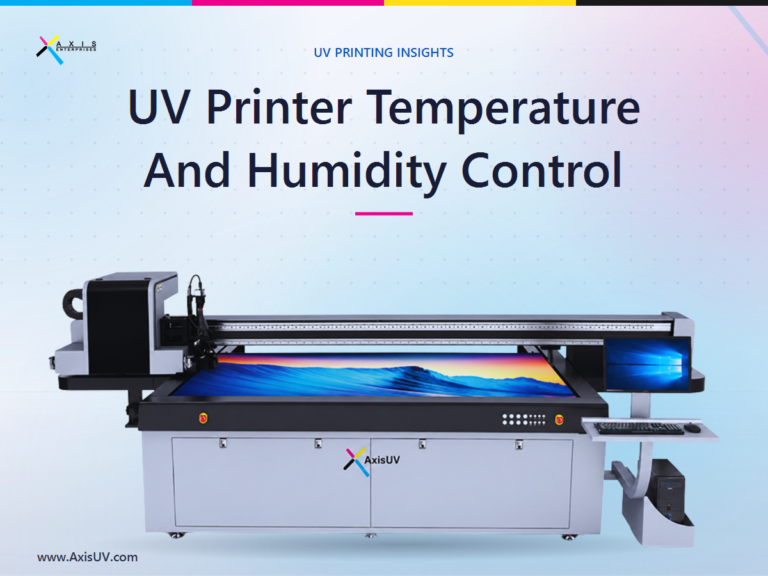
In-house UV printing is producing your own printed and decorated products on a flatbed UV printer you own, instead of sending the work to an outside vendor. A flatbed UV printer lays ink directly onto a rigid or flexible surface and cures it instantly with ultraviolet light.
That instant-cure step is what makes it so flexible. UV curing is a low-temperature, high-speed, solventless process, so the print is dry and handle-ready the moment it leaves the bed. Because it is built on inkjet printing with no plates or screens, there is almost no setup cost per job, which is precisely why one-piece and small-batch orders become profitable.
How fast is the Indian customization market actually growing?
Fast enough that the capability is becoming a competitive requirement, not a luxury. The digital and short-run printing wave is pulling demand away from traditional long-run plants.
- India’s digital printing market was valued at about USD 1.4 billion in 2024 and is projected to reach USD 2.9 billion by 2033, a 7.8% CAGR, according to IMARC Group.
- India’s UV curing system market is projected to grow from USD 150.5 million in 2026 to USD 324.5 million by 2031, a 13.7% CAGR that outpaces the global rate of 8.3%, per MarketsandMarkets.
The signal is clear. The slow-growing part of the market is the commodity long run. The fast-growing part is the varied, branded, short-run work that favors an agile producer.
Why do buyers now reward speed and variety over price?
Because their own customers demand it. Personalization has moved from novelty to expectation, and buyers pay for it. Deloitte’s consumer research found that 36% of consumers want personalized products, and of those interested, 71% are willing to pay a premium.
“Those businesses who do not offer an element of personalisation risk losing revenue and customer loyalty over the longer term as customers increasingly demand personalisation,” said Ben Perkins, Head of Consumer Business Research at Deloitte.
A large factory structured around minimum order quantities cannot easily serve a client who wants 50 custom panels, a run of personalized corporate gifts, or a single prototype by Friday. A small manufacturer who owns the machine can say yes to all three.
Where does a small manufacturer actually have the advantage?
The advantage sits in four places where large-scale plants are structurally weak. Each one maps to a capability an in-house UV setup gives you.
What should a buyer look for before backing this strategy?
Look for the capabilities that convert agility into durable margin, not just a low sticker price. The machine is only as valuable as the production system and support around it.
- Genuine material versatility. The ability to print across rigid and flexible substrates on one platform is what lets you absorb varied orders instead of turning them away.
- White ink and varnish capability. These are the finishes that let a small shop sell premium, not commodity, and command the price that scale players cannot match on short runs.
- Honest total cost of ownership. Judge the machine on its full total cost of ownership, not its price tag, because consumables (ink and printheads), uptime, and service decide real profitability far more than the sticker price does.
- Local service and spare-part availability. A machine that sits idle waiting for a part erases every speed advantage you bought it for.
- Operator-friendly workflow. Saved profiles and simple job setup are what let one operator handle a varied order book, keeping your cost base light.
How does a small shop turn agility into real margin?
This is the heart of the Make in India opportunity for smaller producers: local value addition and in-house production let you keep control, keep the margin, and keep the client, rather than renting all three from a vendor.
A better way forward
If you are a manufacturer, signage shop, gifting business, furniture or interior brand, or a startup building customized products, bringing UV printing in-house is how you trade on speed and flexibility instead of fighting large factories on price. At Axis Enterprises (uvprinterindia.com), we help Indian businesses choose the right flatbed UV printer for their exact material mix and order profile, and we back it with lifetime support so uptime stays on your side.
The goal is simple: make the work you used to outsource, keep the margin that used to leave your business, and say yes to the custom orders larger competitors keep turning down. You can book a free UV printing machine buying consultation to map the numbers against your own order book, or request a live machine demonstration to see the material range for yourself.
Frequently asked questions
Which industries use flatbed UV printers the most?
Signage and display makers, promotional-product and corporate-gift businesses, phone-case and personalized-product sellers, packaging and label producers, furniture and interior brands, and small manufacturers decorating their own components. Any business that handles short-run, customized, or branded work is a natural fit.
Can one UV printer really print on acrylic, wood, glass and metal?
Yes. A flatbed UV printer cures ink directly onto a wide range of rigid and flexible substrates, including acrylic, wood, glass, metal, leather, and PVC, using the correct primer and ink profile for each material. This single-platform versatility is exactly what lets a small shop accept varied orders a fixed factory line cannot.
How can I reduce delivery time without hiring more staff?
Bring the work in-house so there is no vendor queue, batch jobs by material and thickness to cut setup time, and save repeat job presets so one operator can run a varied order book. In-house UV production removes the back-and-forth with outsourcing vendors that causes most delays.
At what outsourcing cost does buying a UV printer make sense?
A practical trigger is auditing three months of outsourcing spend. When the recurring amount you pay vendors could instead cover an EMI on your own machine, in-house production usually wins, because after that you keep the margin and the turnaround advantage on every future job. The decision is specific to your order mix, so model it on your real volumes.
Is in-house UV printing only for large businesses?
No. The economics favor smaller and mid-sized producers because UV printing has almost no per-job setup cost, which makes single pieces and small batches profitable. That is the opposite of a large plant’s cost structure, so agility, not size, is the advantage here.
Sources
- Press Information Bureau (Government of India), MSME backgrounder citing Economic Survey 2025-26
- IMARC Group, India Commercial Printing Market and India Digital Printing Market
- MarketsandMarkets, India UV Curing System Market
- Deloitte, One in three consumers wants personalised products (press release)
- Deloitte Consumer Review, Made-to-order: The rise of mass personalisation