
Published: 27 October 2026 | Last updated: 27 October 2026
Quick answer: Lighting and lamp manufacturers in India can decorate products in-house using a flatbed UV printer, which prints full-colour designs, logos, names, and textures directly onto acrylic, wood, metal, glass, and MDF lamp parts. This removes the cost and delay of outsourced stickers, screen printing, or pad printing, and it lets a maker offer personalized and premium finishes that command higher prices. For most Indian lamp and decor businesses, the decision is less about print resolution and more about which decoration method protects margin, enables short custom runs, and survives daily handling.
Why are lamp makers suddenly competing on looks, not just lumens?
Because the Indian lighting buyer now pays for design, not just brightness. India’s LED lighting market was valued at about US$ 6.0 billion in 2025 and is projected to reach US$ 27.81 billion by 2034, a compound annual growth rate of 18.58 percent, according to IMARC Group’s 2025 India LED lighting analysis. As the category grows, the basis of competition shifts from the bulb to the look.
That shift is already named by the industry. Nikhil Gupta, head of marketing and strategy at Signify (the company formerly known as Philips Lighting), has pointed to customization, sustainability, and premiumization as the three forces reshaping India’s lighting market, as reported by Storyboard18 in its coverage of the lighting industry.
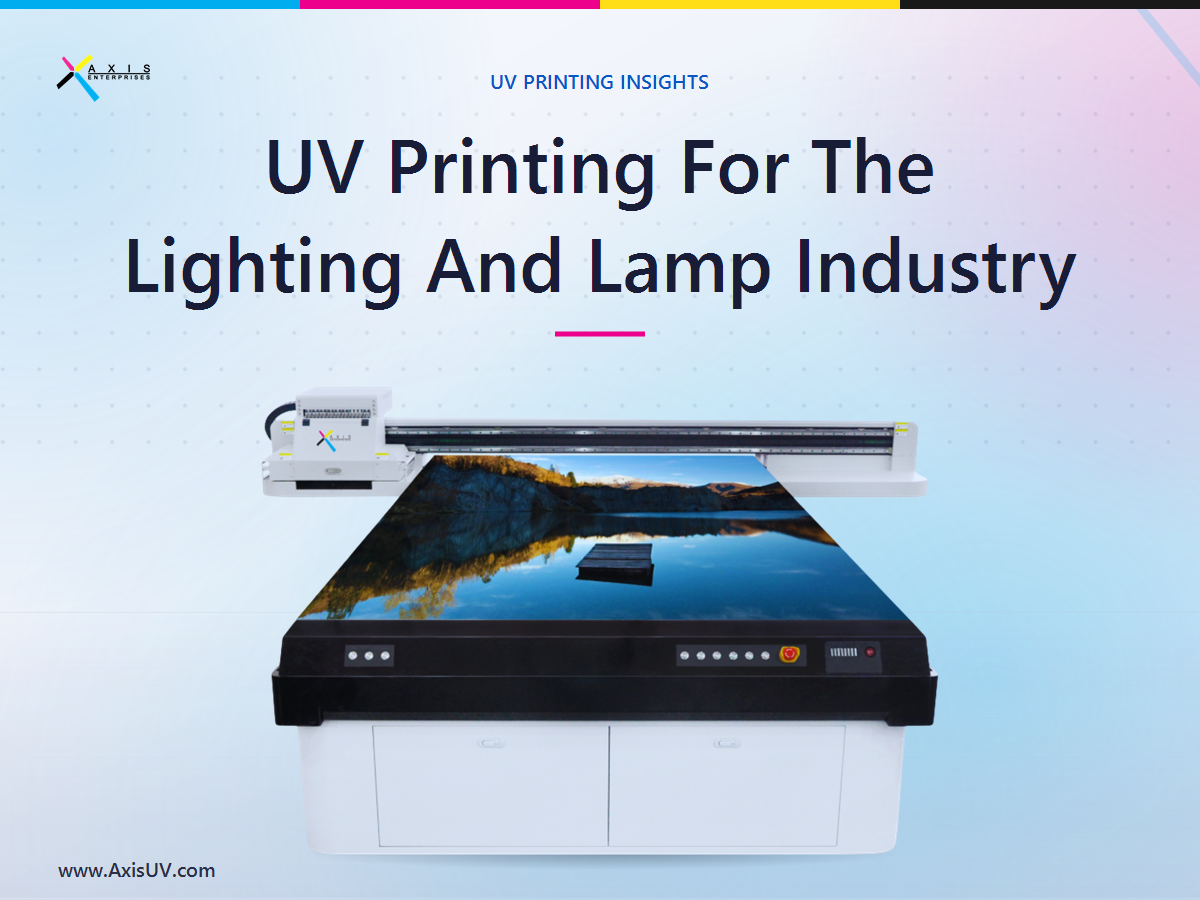
UV printing is a process that uses inkjet heads to lay down ink that is instantly hardened by ultraviolet light through UV curing. The result is a durable, full-colour image bonded directly to the surface of a product, which is exactly what a premium lamp needs.
What is the status quo quietly costing lighting manufacturers?
Outsourced decoration is where lamp makers leak both margin and time. Every design sent to a sticker shop, screen printer, or pad printer adds a markup, a minimum order quantity, and a few days of waiting, which makes small custom orders unprofitable to accept.
Demand for decorated and designer lighting is rising, not falling. India’s decorative lighting market was valued at around US$ 1.7 billion in 2025 and is forecast to reach US$ 3.0 billion by 2034, per IMARC Group’s India decorative lighting report. A maker who can only offer plain products, or who must outsource every custom finish, cannot serve that premium demand at a profit.
There is also a quality cost. Stickers and labels peel at the edges near warm lamp housings, and screen printing struggles with short runs and fine gradients. Buyers notice, and a peeling logo on a decor lamp becomes a returned order.
What is actually changing in how lamps and luminaires get decorated?
The change is a move from indirect decoration (stickers and applied labels) to direct-to-product printing. Instead of printing on paper or vinyl and sticking it on, a flatbed UV printer prints the artwork onto the lamp part itself.
This matters because the LED products that dominate the category are often made of acrylic, glass, aluminium, and wood, the exact rigid substrates a flatbed UV printer handles well. White ink lets a maker print bright, opaque designs on clear acrylic or dark metal, and a clear varnish layer can add gloss, matte, or raised texture in a single pass.
The broader technology is scaling fast worldwide. The global UV inkjet printing market was estimated at US$ 60.09 billion in 2025 and is forecast to reach US$ 92.82 billion by 2030, a CAGR of roughly 8.9 percent, according to The Business Research Company’s UV inkjet printing market report. Falling machine costs and wider material support are what make in-house printing realistic for a small lighting business today.
How should a lighting business judge a decoration method in 2026?
Judge it by profit per order and flexibility, not by headline print resolution. A smart buyer in this category weighs a short list of criteria that separate a tool that grows the business from one that just prints.
- Short-run economics: Can you profitably make one personalized lamp, not only a batch of 500?
- Material range: Does it print on acrylic, glass, metal, wood, and MDF without changing machines?
- Durability on warm, handled products: Does the print resist scratching, cleaning, and heat near the light source?
- Premium finishes: Can it add white ink underbase, gloss varnish, and raised texture that justify a higher price?
- Turnaround control: Does bringing decoration in-house cut days off every custom order?
What should you look for before investing in in-house printing?
Look for a method that wins on durability, personalization, and short-run cost at the same time. The table below compares the common ways a lamp or decor maker can decorate products, so the trade-offs are visible at a glance.
A short checklist for the buying decision: confirm the machine’s bed size fits your largest lamp panel, ask for a sample printed on your own material, check that white ink and varnish are supported, verify local service and spare-part availability, and confirm training is included so your operator is productive from week one.
A better way forward for Indian lamp and lighting makers
Everything above points to one capability: a flatbed UV printer that a lighting business owns and runs itself. Axis Enterprises supplies flatbed UV printing machines to Indian manufacturers, decor brands, and gifting businesses through uvprinterindia.com, with guidance on choosing the right bed size, ink configuration, and setup for your products.
The opportunity is broad because the buyer base is broad. India had more than 5.70 crore MSMEs registered on the Udyam platform as of 2025, and the sector contributes close to 30 percent of national GDP and over 45 percent of exports, per the Ministry of MSME’s 2025 statement. Many of those small manufacturers, gift sellers, and interior brands need exactly the personalized, premium decoration an in-house UV printer provides. You can compare UV printer models and specifications and understand GST-aware pricing before you commit.
If you are weighing whether to bring decoration in-house, the simplest next step is a short, no-pressure conversation about your products and volumes. You can book a free UV printing machine buying consultation or request a printed sample on your own material, so the decision is based on your real lamp parts and your real numbers, not a generic spec sheet.
Frequently asked questions
Can a UV printer print directly on acrylic and glass lamp parts?
Yes. Flatbed UV printers are designed for rigid materials including acrylic, glass, metal, wood, and MDF, which are the common materials in modern lamps and luminaires. A white ink layer lets designs stay bright and opaque even on clear or dark surfaces.
Is in-house UV printing worth it for a small lighting business?
For most small makers, the value comes from accepting profitable short and custom runs that outsourcing cannot serve, plus faster turnaround on every order. Because India’s decorative and LED lighting markets are both growing, the ability to offer personalized and premium finishes directly supports higher prices.
Will the printed design survive heat and handling near the light?
UV-cured ink bonds to the surface and resists scratching and cleaning far better than applied stickers, which tend to peel at the edges near warm housings. For products with direct, sustained high heat, choosing the right substrate and ink profile matters, which is part of the setup guidance a supplier should provide.
What is the difference between UV printing and screen printing for lamps?
Screen printing needs a separate screen and setup for every design and colour, which makes short runs and personalization expensive. UV printing is digital, so one machine prints full-colour, variable designs on demand with no per-design setup, which suits custom lamp orders.
How is GST handled when buying a UV printer in India?
A UV printer purchase in India carries Goods and Services Tax (GST), and registered businesses can generally claim input tax credit on a machine bought for business use. A supplier should give you a clear, GST-inclusive quotation so you can plan cash flow and financing accurately.
Sources
- IMARC Group, Indian LED Lighting Market (2025)
- IMARC Group, India Decorative Lighting Market (2025)
- The Business Research Company, UV Inkjet Printing Global Market Report (2026)
- Ministry of MSME, Press Information Bureau, Udyami Diwas / MSME Day statement (26 June 2025)
- Storyboard18, Customization, sustainability and premiumization are the top trends of the lighting industry (Nikhil Gupta, Signify India)