
Published: October 18, 2026
Quick answer
Yes, UV printing can meaningfully grow a handicrafts or artisan business. A flatbed UV printer lets you decorate, brand, and personalize handmade products directly on wood, brass, marble, glass, ceramic, leather, and MDF, with full color, white ink, and raised texture, in a single pass. For an Indian artisan workshop or export house, that means printing single customized pieces profitably, cutting dependence on outside screen and pad printers, shortening turnaround, and charging premium prices for a finish buyers will pay more for. The decision that matters is not the cheapest machine, it is the lowest total cost of ownership across the materials you actually sell.
How big is India’s handicrafts opportunity right now?
India’s handicrafts sector is large, export-led, and growing. According to the Press Information Bureau (December 2025), handicraft exports (excluding hand-knotted carpets) reached ₹33,122.79 crore in 2024-25, up from ₹20,082.53 crore a decade earlier in 2014-15.
The same government data puts the workforce at 64.66 lakh handloom and handicraft artisans, with women making up about 64 percent of that base. This is an industry built almost entirely on micro and small units, the kind of handicraft workshops that define India’s rural economy.
Demand abroad is concentrated and premium. The India Brand Equity Foundation (IBEF) reports that in FY2025-26 the United States took 37.66 percent of India’s handicraft exports, followed by the UAE at 8.28 percent and the UK at 7.10 percent. IBEF, citing IMARC, also values the domestic handicrafts market at USD 4.85 billion in 2025, rising to a projected USD 8.29 billion by 2034 at a compound annual growth rate of 6.13 percent.
Why do most artisan businesses still lose margin on decoration and branding?
Most artisan businesses lose margin because the decoration step is slow, outsourced, and limited to a few techniques. Screen printing and pad printing need setups, screens, and minimum quantities that make short runs and one-off personalization unprofitable, so the highest-value custom orders are the hardest ones to say yes to.
Stickers and labels are the usual shortcut, and they peel, fade, and cheapen a handmade product. Traditional methods also struggle with uneven, curved, or dark surfaces, which is exactly what brass, carved wood, and stone handicrafts present.
The market signal points the other way. Deloitte’s report Made-to-Order: The rise of mass personalisation found that over 50 percent of customers in certain categories are willing to pay more for a customized product. A workshop that cannot produce profitable one-piece customization is leaving that premium on the table.
What does this mean for a small handicrafts or artisan workshop?
For a small workshop, the practical pain is specific: you cannot accept short custom orders at a profit, you wait on outside vendors for branding, and you compete on price instead of finish. Every outsourced decoration job also hands margin, turnaround control, and quality control to someone else.
There is a branding cost too. India has 318 GI-tagged handicraft products according to the Press Information Bureau, yet many makers ship unbranded or sticker-branded goods that never carry their own name, logo, or story to the buyer.
The category numbers show where decoration value sits. In 2024-25, the Press Information Bureau recorded woodware exports of ₹8,524 crore, art metal wares of ₹4,386 crore, and hand-printed textiles of ₹3,217 crore, all categories where surface printing, branding, and finish directly affect price.
What is UV printing, and why does it fit handicrafts so well?
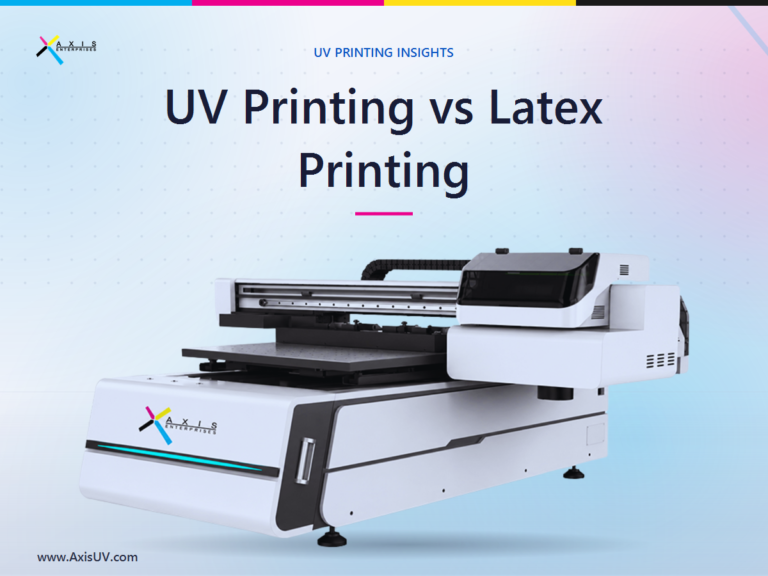
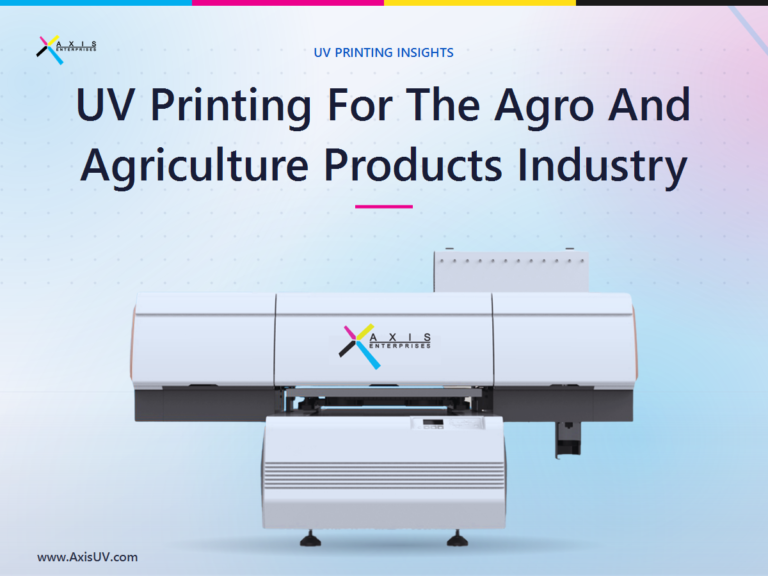
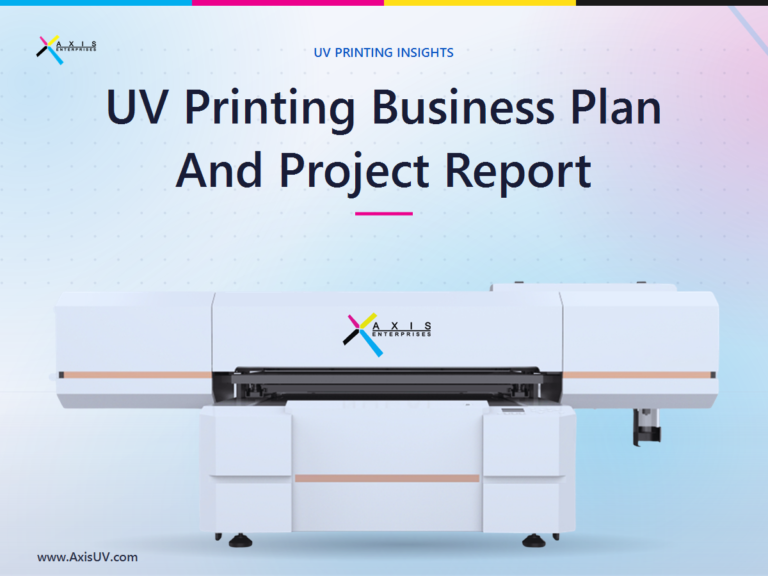
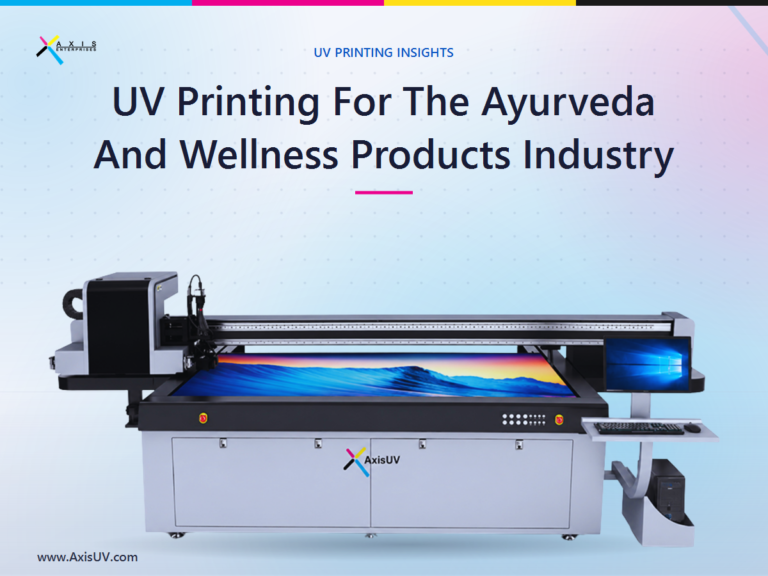
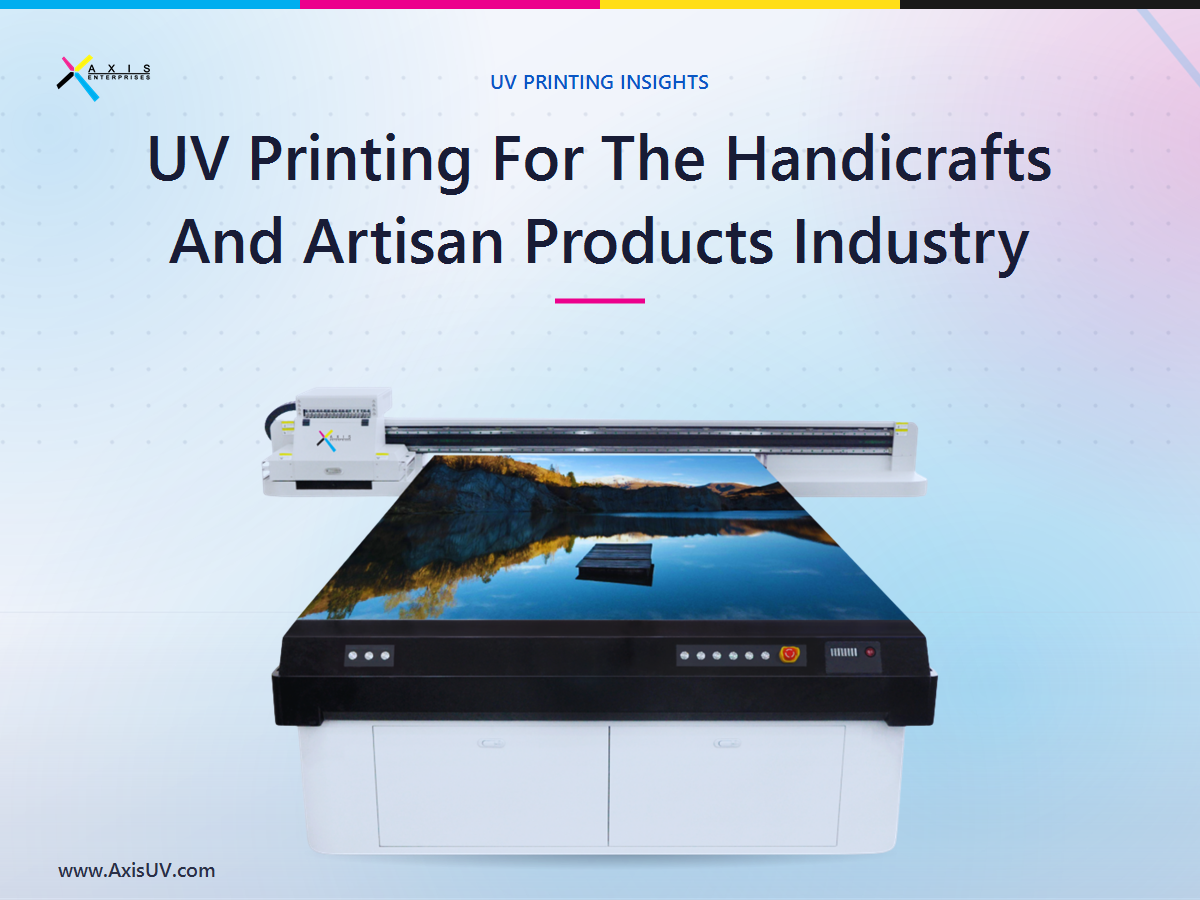
UV printing is a digital inkjet process that jets ink onto a surface and instantly hardens it with ultraviolet light, a technique called UV curing. Because the ink cures on contact rather than soaking in or air-drying, a UV flatbed printer can print full color directly onto rigid and irregular materials and move straight to the next job.
For handicrafts, that versatility is the point. One flatbed machine can print on wood, MDF, acrylic, glass, ceramic, brass and other metals, marble, stone, and leather, which covers most of what an Indian artisan workshop actually makes.
UV printing also adds effects that handmade goods sell on: an opaque white ink underbase so colors stay vivid on dark wood or brass, spot varnish for a premium gloss, and built up layers for raised, tactile texture. The growth of the underlying technology reflects the demand: MarketsandMarkets values the UV LED market, the curing technology inside modern UV printers, at USD 1.23 billion in 2025, rising to USD 2.16 billion by 2030 at a compound annual growth rate of 11.9 percent (MarketsandMarkets).
How should a handicrafts business think about buying a UV printer?
The right way to buy is to start from the products and materials you sell, not from the sticker price of the machine. A printer that is cheap to buy but slow on your core materials, or costly to run per piece, is the expensive option over three years.
Think in total cost of ownership, the full cost of owning and running the machine over its life, not just the purchase figure. That means ink and consumable cost per print, printhead life, maintenance and downtime, electricity, operator skill, and the price and speed of local service and spare parts.
Build the India-specific costs into the plan. A UV printer is business plant, so account for Goods and Services Tax (India) on the machine and consumables, the input tax credit your registered business can claim against it, and your Udyam (MSME) registration, which opens formal financing and scheme support. India’s MSME base is vast and export-active: IBEF reports roughly 7.9 crore MSMEs registered on the Udyam portal as of March 2026, and MSMEs account for 48.58 percent of the country’s exports.
What should you look for in a UV printer and supplier?
Look for a machine and a supplier that match the materials, order sizes, and finish your handicrafts business depends on. The checklist below separates what genuinely affects profit from what only looks good on a brochure.
A supplier who can demonstrate prints on your own sample materials, and who stocks spares and service engineers in India, is worth more than a marginally lower machine price.
A better way forward
If your handicrafts or artisan business wants to bring decoration in-house, print profitably on almost any material, and sell a finish customers pay more for, a UV flatbed printer is the tool built for it. At Axis Enterprises, through uvprinterindia.com, we help Indian manufacturers, exporters, and small workshops choose the right UV printing machine for the exact products and materials they sell.
Rather than sell you a box, the team will walk through your current products, outsourced jobs, and target finish, then match you to a machine on total cost of ownership, not just price. You can see the range of UV flatbed printers at Axis Enterprises or request a free print sample on your own material before you decide.
Frequently asked questions
Can a UV printer print directly on brass, wood, and marble handicrafts?
Yes. A UV flatbed printer prints full color directly onto brass and other metals, wood, MDF, marble, stone, glass, ceramic, and leather. A white ink underbase keeps the design bright on dark or metallic surfaces, and the ink cures instantly so the piece is ready to handle at once.
Is UV printing profitable for single, customized pieces?
Yes, because UV printing is digital and needs no screens, plates, or setup per design. That makes a run of one as practical as a run of a hundred, which is what lets artisan businesses charge a premium for personalization that screen and pad printing cannot deliver profitably at low volume.
Will the print scratch or fade on handmade products?
UV-cured prints are hard and durable because the ink is fully cross-linked by ultraviolet light rather than left to dry. For heavy-handling or outdoor items, adhesion depends on using the correct primer and ink profile for each material, and a varnish layer adds further scratch and scuff resistance.
Does a handicrafts exporter need GST and MSME registration to buy a UV printer?
Registration is not required to buy a machine, but it helps. A GST-registered business can claim input tax credit on the printer and consumables, and Udyam (MSME) registration opens formal financing, priority-sector lending, and government scheme support that make the investment easier to fund.
How do I choose between a small and large UV flatbed printer for handicrafts?
Match the bed size to your most common and most valuable products, not to the largest job you might ever get. A smaller flatbed with good running economics often serves gift, decor, and personalized handicraft lines better, while a larger bed suits panels, signage, and bulk industrial work.
Next step
If you run a handicrafts, gifting, or artisan products business and want to see what UV printing could add to your margins, the most useful next step is a short, no-pressure conversation about your specific products. Book a free UV Printing Machine Buying Consultation at uvprinterindia.com, and bring a few of your current items so the finish, materials, and costs can be mapped to a machine that pays for itself.
Sources
- Press Information Bureau, Government of India, “Handicrafts at the Heart of India’s Rural Economy” (December 2025)
- India Brand Equity Foundation (IBEF), “Handicrafts Industry in India”
- India Brand Equity Foundation (IBEF), “MSME Industry in India”
- MarketsandMarkets, “UV LED Market” (2025 to 2030 forecast)
- Deloitte, “Made-to-Order: The rise of mass personalisation” (2015)
- Wikipedia, “UV curing”
- Wikipedia, “Inkjet printing”
- Wikipedia, “Handicraft”
- Wikipedia, “Geographical indications in India”
- Wikipedia, “Goods and Services Tax (India)”