

Published: November 16, 2026
Quick answer: should you keep buying from online print marketplaces?
If your business orders custom printing every week, online print marketplaces are convenient but costly, because their per order markup, shipping, and rush fees quietly erode your margin on every job. As of November 2026, a growing number of Indian signage shops, gifting firms, packaging units, and small manufacturers are moving repeat, high value jobs in house instead. The practical rule: once your monthly spend on outsourced printing covers the running cost of a machine plus a margin, owning the capability usually protects profit and turnaround better than renting it job by job.
What is an online print marketplace?
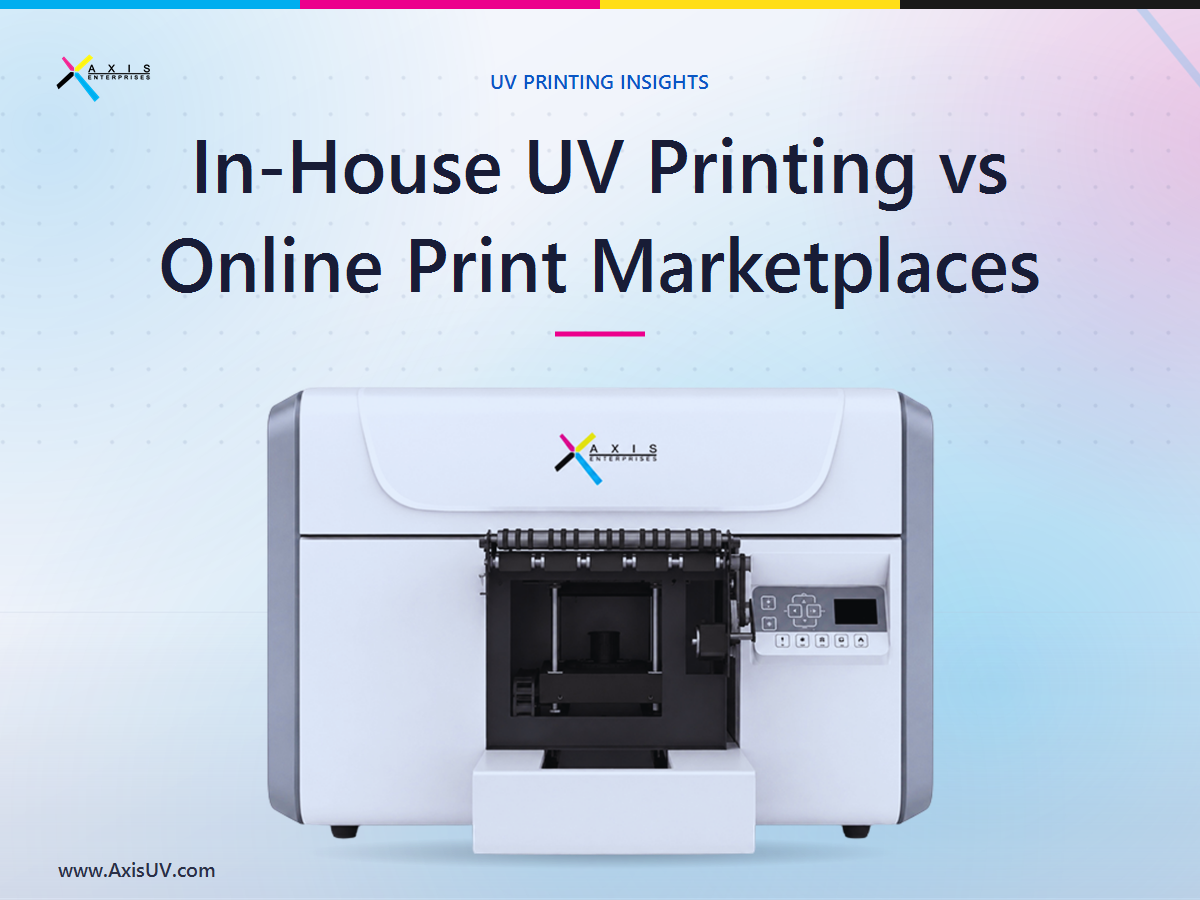
An online print marketplace is a website or platform that takes your print order, routes it to a production vendor, and delivers the finished product to you for a fee. You upload a design, pick a quantity, pay an invoice, and wait. You never touch the machine.
That model feels simple because the cost looks like one clean number. The problem is what sits inside that number: the platform’s margin, the actual printer’s margin, packaging, and freight, all stacked on top of the real production cost. You pay for every layer, on every order, forever.
How big is this shift, and why now?
The shift is large because the whole market underneath it is growing fast. According to IMARC Group’s India digital printing analysis, the India digital printing market reached USD 1.50 billion in 2025 and is projected to grow at a 7.64 percent CAGR through 2034, with e-commerce and demand for personalized products named as the primary drivers.
At the same time, buyer demand keeps climbing. A 2025 report covered by The Tribune projects India’s e-commerce market will reach USD 345 billion by 2030, with personalized and convenient products called out as a leading growth category. More orders for custom, short run, personalized items means more jobs that someone has to actually print.
The question every owner now faces is simple: who keeps the margin on all that work, you or the marketplace?
Why does outsourcing quietly leak your profit?
Outsourcing leaks profit because the invoice hides your true cost. According to Doceo’s 2025 analysis of print spending, most businesses spend between 1 and 3 percent of annual revenue on print related activity, and most never track it as a single line. That is the money disappearing through the marketplace.
The total cost of ownership of outsourcing is more than the quoted price. On repeat jobs it includes these recurring drains:
- Stacked markup. Both the platform and the actual printer take a margin, so you pay two profit layers on work you could produce once.
- Rush and revision fees. A last minute change or a same day deadline triggers extra charges that rarely appear in your original estimate.
- Shipping and transit time. Every order carries freight cost and days of waiting you cannot compress.
- Lost control. Colour, finish, and quality sit in someone else’s hands, so a reprint means another cycle, another fee, another delay.
The global scale of this spending is real. Doceo’s 2025 analysis, citing Research Nester, reports the commercial print outsourcing market reached USD 94.6 billion in 2025 and is projected to hit USD 157 billion by 2035. That is a vast pool of margin flowing to intermediaries rather than to the businesses that sell the final product.
What does this mean for small print buyers specifically?
For a small business, the pain is sharper than for a large enterprise, because your margins are thinner and your deadlines are tighter. When a corporate client asks for 200 personalized items by Friday, the marketplace route costs you both profit and speed at exactly the moment you can least spare either.
Three specific pains hit Indian small and medium businesses hardest:
- You cannot say yes to custom orders profitably. Small runs and single piece personalization carry high per unit outsourcing cost, so you either decline the work or accept razor thin profit.
- You compete on someone else’s timeline. If a platform quotes five to seven days, you cannot promise a local client same day or next day, even when that speed is the only thing that would win the order.
- You stay invisible on margin. Because the cost is one lump invoice, you never see which products bleed profit and which could be far cheaper produced in house.
This matters more in India right now because the formal small business base is expanding quickly. The Ministry of Micro, Small and Medium Enterprises reported in December 2025 that Udyam registrations crossed 7.3 crore, and that MSME investment and turnover limits were raised from 1 April 2025 to let firms grow without losing MSME benefits. More formal businesses means more competition for the same custom print work, and margin, not just capacity, decides who wins.
How do you actually teach yourself to read the real numbers?
Start by separating the marketplace price into its parts, because the single invoice is designed to hide them. The core technology is more accessible than most buyers assume, which is exactly why the economics have shifted.
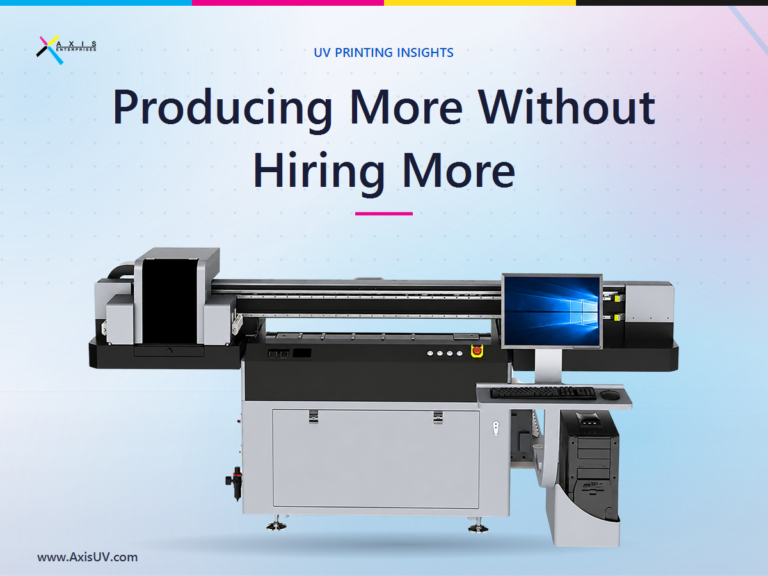
Modern flatbed inkjet systems print directly onto a wide range of materials, because the ink is cured instantly by light rather than air drying. This process, known as UV curing, lets a single machine print on acrylic, wood, glass, metal, leather, MDF, and PVC, and it dries in seconds, which is what makes short runs and same day jobs economically viable in house.
That versatility is the hinge of the argument. When one machine can do what you currently split across several outsourced vendors, the stacked markup you were paying each of them collapses into a single, predictable running cost that you control.
The teaching point is this: outsourcing feels cheaper only because its cost is scattered and invisible, while in house capability feels expensive only because its cost is concentrated and visible. Visible cost is manageable cost.
How should a smart buyer rethink the decision in 2026?
A smart buyer stops asking “what does this one job cost?” and starts asking “what does a year of this work cost, and who should own it?” That reframing changes the answer for any business with steady, repeat print demand.
Use these criteria to judge whether to keep outsourcing or bring work in house:
- Repeat volume. Jobs you order again and again are the first candidates to internalize, because every repeat pays the marketplace markup again.
- Material range. If customers keep asking for products on surfaces you currently cannot offer, a single versatile machine both saves outsourcing cost and unlocks new revenue.
- Turnaround sensitivity. If speed wins or loses you orders, in house production removes the days lost to shipping and vendor queues.
- Margin visibility. If you cannot see your true cost per product today, you cannot price confidently, and a known in house running cost fixes that.
- Tax position. For a registered business, the Goods and Services Tax input credit on a capital purchase changes the real acquisition cost, so judge the machine on its post credit figure, not the sticker price.
What should you look for before bringing printing in house?
Look for capability, support, and honest economics, in that order, because a cheap machine with weak support costs more than a fair machine that runs reliably. Treat the purchase as a long term production decision, not a one time buy.
A practical checklist for any buyer evaluating an in house printing option:
- Material breadth. Confirm the machine prints the specific surfaces your customers actually order, tested with the correct primer and ink profile.
- Running cost transparency. Ask for a clear cost per print across ink, white ink, varnish, and consumables, not just the machine price.
- Service and spare parts. Choose a supplier that stocks parts locally and answers quickly, because downtime, not purchase price, is the real risk.
- Training and onboarding. Look for proper operator training, since most quality and maintenance problems trace back to handling, not the hardware.
- Honest ROI framing. A trustworthy supplier shows you the break even against your current outsourcing spend, GST position included, rather than only quoting a price.
The comparison below summarizes how the two models differ on the factors that decide profit on repeat work.
A better way forward
Once the numbers are visible, the next step is to match a machine to your real workload rather than to a brochure. That is the part most buyers get wrong on their own, and it is exactly where honest guidance pays for itself. At Axis Enterprises, we help Indian business owners work out whether in house UV printing fits their volume, materials, and margins before they spend a rupee, so the decision rests on your numbers rather than a sales pitch.
We supply flatbed UV printing machines for signage shops, gifting and personalization businesses, packaging and label units, furniture and interior brands, and small manufacturers across India. If you want to see where your outsourcing spend is really going, you can book a free UV printing machine buying consultation and we will map your current print costs against an in house setup, GST position included. For buyers still weighing options, our team can also walk you through how to compare UV printer running costs honestly, line by line.
Next step
If your business prints custom work every week and you have never once added up a full year of outsourcing invoices, that single calculation is the most profitable hour you will spend this quarter. Pull your last twelve months of print spend, separate the repeat jobs, and look at what you are really paying the middle layer. When you are ready to see what the same work would cost in house, you can request a free buying consultation with Axis Enterprises and get a clear, numbers first answer with no obligation.
Frequently asked questions
How much money am I actually losing by outsourcing every month?
You are losing the stacked markup on every order, which on repeat jobs typically means paying both a platform margin and a printer margin on top of real production cost. The only way to know your figure is to total twelve months of print invoices and separate the jobs you order repeatedly. That repeat spend is the money an in house machine would recover.
At what outsourcing spend does buying a UV printer make sense?
It usually makes sense once your monthly outsourcing spend on repeat, in house suitable jobs covers the machine’s running cost plus a reasonable margin. Below that level, outsourcing can still be the cheaper option for low or irregular volume. The decision should rest on your own repeat volume, not a generic threshold.
Can one UV printer really replace multiple outsourced vendors?
Often yes, because a single flatbed UV machine prints across acrylic, wood, glass, metal, leather, MDF, and PVC with the right profiles. That range is what lets you consolidate work you currently split across several vendors. The practical limit is your material mix, so confirm the machine is tested on the specific surfaces your customers order.
Does bringing printing in house help with turnaround time?
Yes, because you remove the vendor queue and the shipping days that outsourcing adds. In house production lets you offer same day or next day work on urgent local orders, which is frequently the deciding factor in winning them. Control over the schedule is one of the clearest advantages of owning the capability.
How does GST affect the real cost of buying a UV printer in India?
For a GST registered business, the input tax credit on a capital purchase reduces the effective acquisition cost, so you should evaluate the machine on its post credit figure rather than the sticker price. This is one reason the in house option often looks stronger once the full economics are on the table. Confirm your specific eligibility with your accountant.
Sources
- IMARC Group, India Digital Printing Market (2025)
- IMARC Group, India Commercial Printing Market (2025)
- The Tribune, India E-commerce Market Report (2025)
- GlobalData, India E-commerce Forecast (2025)
- The Statesman, MSME Ministry Udyam Milestones (December 2025)
- Doceo citing Research Nester, Commercial Print Outsourcing Market (2025)