
Walk through any Indian market before a wedding season or a festival and you will notice the same shift. People no longer want a generic gift. They want a frame with their own photo, a keepsake with a name on it, a piece of decor that feels made for one person. For print and gift businesses, that shift is quietly reshaping where the real margins are.
Quick answer: Personalized photo gifts (frames, plaques, keepsakes, and home decor that carry a customer’s own photo, name, or message) are a fast-growing, high-margin niche for Indian print and gift businesses in 2026. Demand is rising because buyers increasingly expect products made just for them, and most are willing to pay a premium for that. The hard part for small businesses is production: outsourcing is slow and low-margin, and many shops cannot print on the mix of materials these gifts use. A single UV flatbed printer lets one operator print full-colour photos directly onto wood, acrylic, glass, and metal, turning low-cost blanks into premium personalised products in-house.
What exactly are personalized photo gifts, and why do buyers pay more?
Personalized photo gifts are everyday objects that are printed to order with a specific customer’s photograph, name, date, or message. Common examples include photo frames, acrylic photo blocks, name plates, printed mugs, wall decor panels, and desk keepsakes. The product is ordinary. The personalisation is what makes it worth more.
The willingness to pay is well documented. In its Consumer Review on mass personalisation (2015), Deloitte reported that 36% of consumers were interested in buying personalised products or services, and that among those willing to pay more, the typical premium was around 20%. A customer who would pause at a plain product will often pay extra when it carries their own face or name.
This is the logic of personalization: a one-of-one item carries emotional value that a mass-produced one cannot. For a print business, that emotional value converts directly into pricing power and repeat orders.
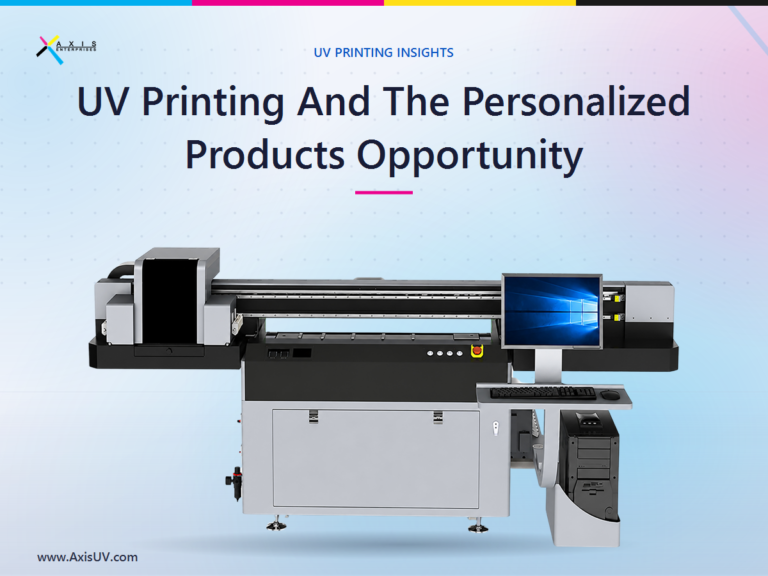
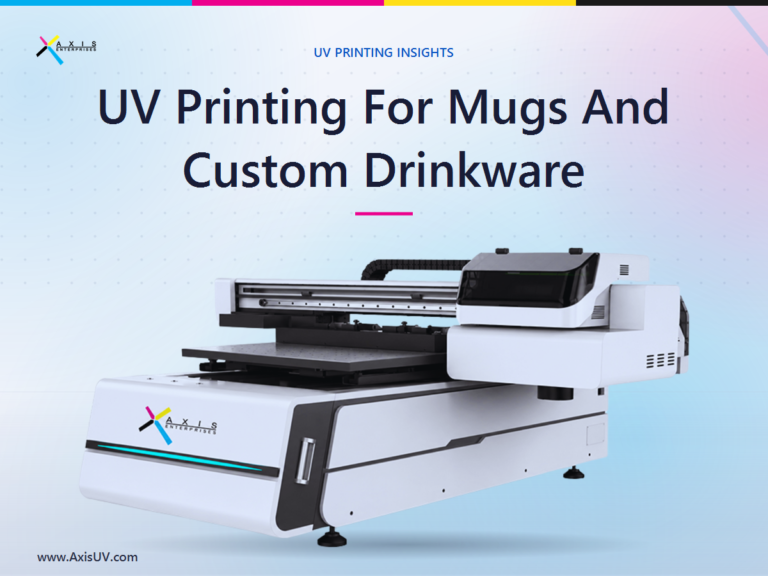
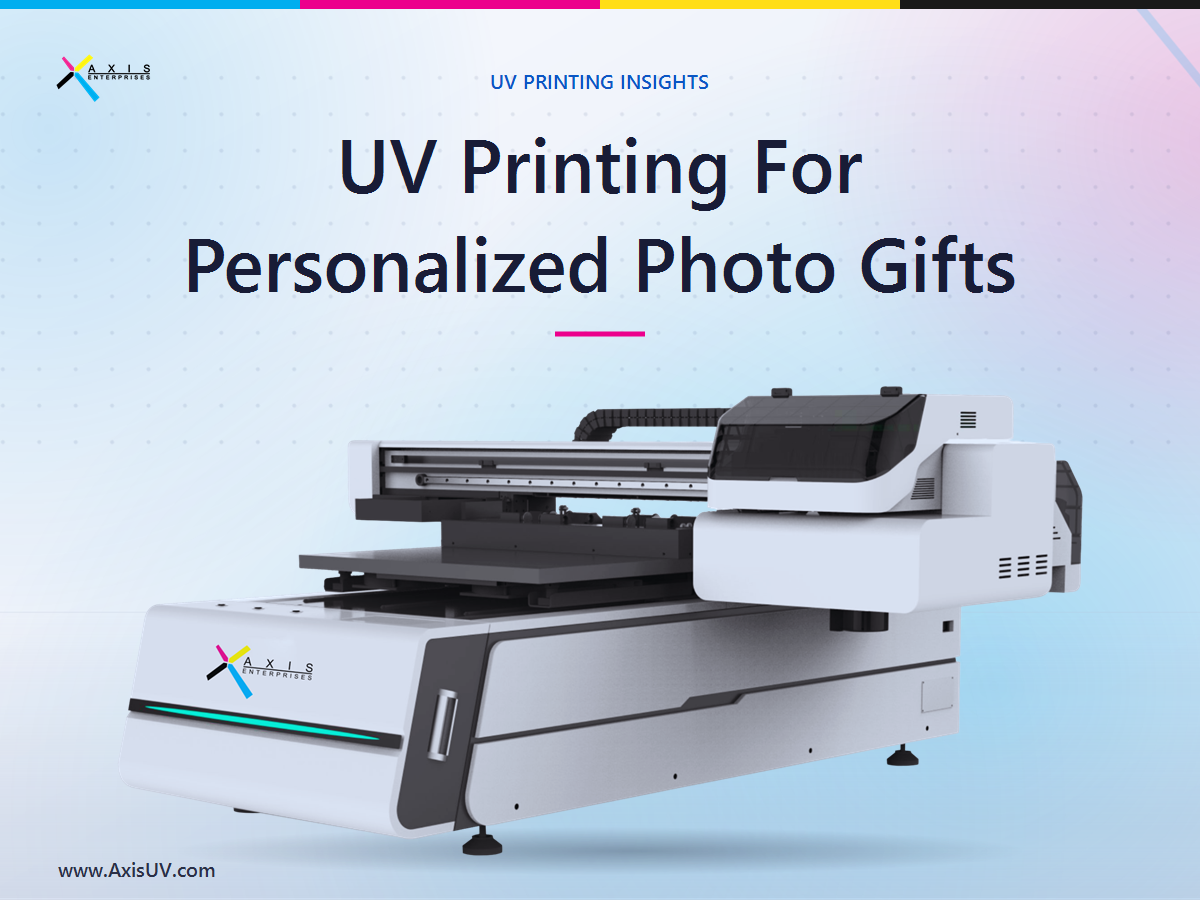
The technology that makes this practical at small scale is UV printing. UV printing is a digital inkjet process in which ultraviolet light cures (hardens) the ink the instant it lands, so full-colour images can be printed directly onto rigid materials and are ready to handle immediately.
How big is the opportunity in India right now?
The spending behind this niche is large and still growing. According to TechSci Research, India’s gifting market was valued at about USD 75 billion in 2024 and is projected to reach roughly USD 92 billion by 2030, a compound annual growth rate of 3.55%. Gifting in India is anchored by an unusually dense calendar of weddings, festivals, and celebrations.
The production side is growing much faster than gifting overall. IMARC Group projects India’s digital printing market to grow at a 19.3% CAGR through 2032, and points to expanding e-commerce and rising demand for personalised products as the main drivers.
Made-to-order production is the sharpest signal of all. According to Straits Research, reported by PrintWeek India, India’s print-on-demand market is expected to grow at a 27.8% CAGR between 2023 and 2031. The direction is clear: buyers want single, customised pieces, not warehouses of identical stock.
The businesses positioned to capture this are small. IBEF reports that India had 6.82 crore MSMEs registered on the Udyam portal as of September 2025, employing about 29.77 crore people and contributing close to 31% of GDP. Most of the shops that could sell personalised photo gifts are exactly these micro and small enterprises.
Why do most print and gift businesses miss this margin?
The demand is sitting in plain sight, yet many print and gift businesses capture very little of it. The reason is almost always production, not marketing. A shop can take the order but cannot make the product profitably in-house.
The broad-market problem is that personalised gifts are, by definition, print-on-demand items in quantities of one. Traditional print methods were built for volume, so a single customised piece either costs too much or gets refused. That gap is where margin leaks out of the business.
For a small Indian print or gift business specifically, the pain usually shows up as three recurring problems:
- Outsourcing eats the margin and the deadline. Sending each customised job to a vendor means slow turnaround, a cut taken out of every sale, no quality control, and minimum order quantities that do not fit single-piece gifting.
- Limited materials limit the catalogue. Stickers, sublimation, and screen printing each work on a narrow set of surfaces. If a customer wants a photo on acrylic, wood, glass, or metal, most shops have to say no or stick a printed label on top.
- Single pieces are not profitable the old way. Setup time and minimums make a quantity of one uneconomic, so businesses turn away the exact high-margin, no-minimum orders that personalised gifting is built on.
What should you look for before producing photo gifts in-house?
The smart question is not “which single gift sells best.” It is “what production setup lets me make many gift types, on many materials, in single quantities, at a healthy margin.” Once the question is framed that way, the buying criteria become obvious.
Before investing, a buyer should look for a setup that offers:
- A wide material range so one machine can print on wood, MDF, acrylic, glass, metal, and more without add-on equipment.
- White ink and varnish so photos stay vivid on dark or transparent materials and finishes look premium.
- Economical single-piece printing so a quantity of one is profitable with minimal setup.
- Fast, direct printing so same-day and urgent festive orders are realistic for one operator.
- Reliable local support and consumables so a breakdown does not stop production for weeks.
The strongest reason to produce in-house is range. One flatbed machine can turn many low-cost blanks into many different premium gifts, which is why the economics work. The table below shows the kind of product lines a single UV flatbed printer can cover.
A plain frame or acrylic block can cost ₹100 to ₹300 as a blank, yet sell for several times that once it carries a customer’s photo and a name. That spread, repeated across many small orders, is the real business case.
A simpler way to bring photo-gift production in-house
This is where a UV flatbed printer earns its place in a print or gift business. At UV Printer India, we help Indian print and gift businesses choose flatbed UV printers suited to personalised photo-gift production, so you can print directly onto the wood, acrylic, glass, and metal these products use, in single quantities, in-house.
Rather than guess which specification fits, you can see which UV printer matches your product range and order volumes and understand the running costs before you commit. If you already know the gifts you want to sell, you can talk to the UV Printer India team about the right setup for your workshop size and budget.
If personalised photo gifts are a direction you want to move into, the next step is small and low-risk. Bring your product ideas and your current outsourcing costs, and book a free UV Printing Machine Buying Consultation to see whether producing these in-house makes sense for your numbers. There is no pressure to buy, only a clear picture of what is possible.
Frequently asked questions
Which personalized photo gifts have the highest demand in India?
Photo frames, acrylic photo blocks, name plates, and personalised home decor are consistently strong because they suit weddings, festivals, and corporate gifting. Products tied to seasonal events see sharp demand spikes, while frames and keepsakes sell year-round. A catalogue that spans several materials captures more of this demand than a single product.
Can I print single customised pieces profitably?
Yes. UV flatbed printing is designed for short runs, including a quantity of one, because there is very little setup between jobs. You print directly onto the blank with no plates or screens, so a single personalised frame or block can carry a healthy margin. This is the core advantage over traditional methods that need minimum quantities.
How much can I charge for a personalized photo gift?
Pricing is driven by the personalisation, not the cost of the blank, so personalised pieces typically sell for several times their material cost. A blank costing ₹100 to ₹300 can become a gift priced much higher once it carries a customer’s photo and name. Under India’s GST system, a registered business can also claim input tax credit on the machine and consumables, which improves the real economics.
Can UV printing replace stickers on gifts?
In most cases, yes. UV printing puts the image directly onto the surface, so there is no label edge to peel, bubble, or fade, and the result looks and feels more premium. For photo gifts, where buyers are paying for quality, direct printing is a clear upgrade over applied stickers.
Do I need separate machines for different materials?
No. A single UV flatbed printer can print on wood, MDF, acrylic, glass, metal, and other rigid materials, which is exactly why it suits a mixed photo-gift catalogue. One machine and one operator can cover the full range, so you add products without adding equipment.