
Published: November 25, 2026
Quick answer: what is second-surface UV printing?
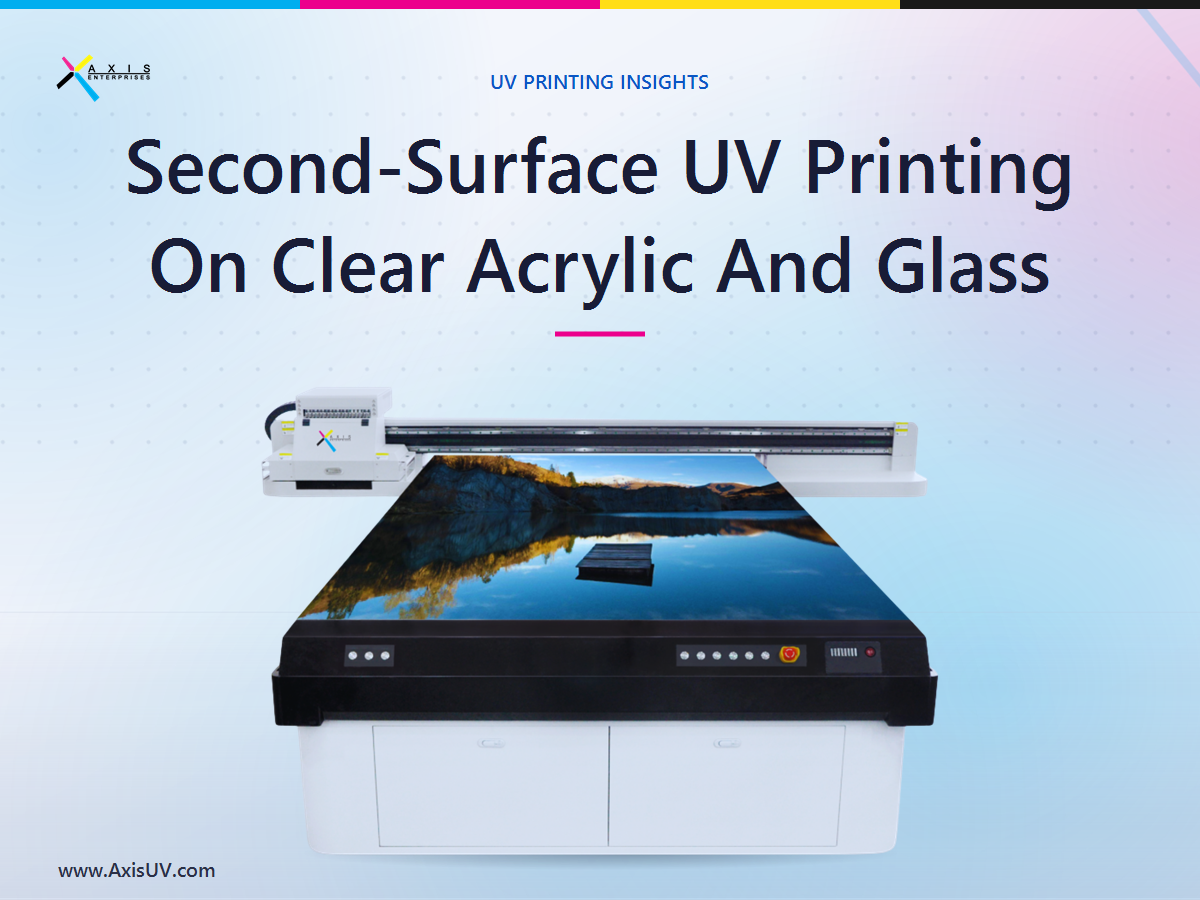
Second-surface UV printing is the technique of printing a mirror-flipped design onto the back of a clear acrylic or glass panel, so the image is viewed through the panel from the front. The transparent material becomes the protective layer, which gives the graphic a glossy, glass-under-image depth and shields the ink from scratches, cleaning, and touch. It is the standard method for premium reception logos, backlit menu boards, nameplates, retail displays, and awards. On a flatbed UV printer it works because the ink cures instantly under UV light and bonds to the smooth surface, and because a white ink layer can be laid behind the colours to make them opaque. Done well, it turns a commodity print into a product a buyer will pay a premium for.
Why is the market for premium printed displays growing right now?
Demand for printed glass and acrylic displays is rising faster than demand for ordinary print. As of November 2026, the India digital signage market was valued by IMARC Group at USD 1,225.0 million in 2026 and projected to reach USD 3,494.3 million by 2034, a 14.0% CAGR, with North India holding 31.8% of that market. That is roughly double the pace of broad commercial print.
The wider print market is growing far more slowly. The India digital printing market was estimated by IMARC Group at USD 1.50 billion in 2025, reaching USD 2.94 billion by 2034 at a 7.64% CAGR. The gap matters: the premium, display-grade end of the market is pulling ahead of the flat, price-driven middle.
Globally, the shift toward UV is clear. Mordor Intelligence valued the UV printers market at USD 1.10 billion in 2026, growing to USD 1.58 billion by 2031 at a 7.59% CAGR. The technology that makes second-surface work is the same technology the market is moving toward.
What is quietly eroding print-shop margins?
The core problem is that ordinary printing has become a commodity, and commodities compete only on price. When ten shops in the same cluster can produce the same banner or sticker, the buyer picks the cheapest quote, and everyone’s margin falls together.
This squeeze is sharpest for small manufacturers. In India, micro, small and medium enterprises are the backbone of production: the government’s MSME fact sheet, drawing on the Economic Survey 2025-26, reports that MSMEs contribute about 31.1% of GDP, 35.4% of manufacturing output, and 48.58% of exports, across more than 7.47 crore enterprises. Most of these businesses compete in crowded categories where differentiation is hard and pricing power is thin.
For a print or signage business, the status quo has three hidden costs: shrinking margins on every repeat job, dependence on whoever quotes lowest, and no premium product to sell the client who actually wants something better. Volume rises, profit does not.
What does this mean for a small print or signage shop?
If your catalogue is all surface-level, same-as-everyone output, you have nothing to charge a premium for, and premium is where the growth is. The buyer who wants a glowing reception logo, a glass-depth nameplate, or a backlit acrylic menu is not comparing you on rupees per square foot. They are comparing you on whether you can make the thing at all.
Most shops cannot, for one reason: they treat clear acrylic and glass as a surface to print on top of, not a lens to print behind. First-surface prints on transparent material scratch, scuff with cleaning, and look flat. Second-surface prints sit protected behind the panel and look like the image is suspended in glass. The difference is visible across a room, and buyers feel it instantly.
How smart buyers should reframe the decision
The right question is not “how cheaply can I print” but “which capabilities let me sell products my competitors cannot.” Second-surface printing on clear acrylic and glass is one of the highest-value capabilities a flatbed UV printer unlocks, and it costs almost nothing extra once the machine is in place. A smart buyer evaluates a UV printer on whether it can deliver it reliably.
Four criteria separate a machine that can do premium transparent work from one that merely prints:
- White ink capability. Second-surface colour needs a white underbase printed behind it, or the design looks washed out against the light. A printer without reliable white ink cannot do this well.
- Layer and colour order control. The software must print colour first, then white, in a single pass with correct mirroring, so the stack reads correctly through the panel.
- Flat, accurate bed and adhesion. Clear acrylic (PMMA) and glass are smooth, non-absorbent surfaces, so consistent ink height, primer handling, and cured adhesion decide whether the print survives handling.
- Dependable local support. A premium product line only pays off if the machine runs. Response time on service and spares matters more than the sticker price.
First-surface vs second-surface UV printing: which should you use?
Use second-surface whenever the material is clear and the viewer looks through it; use first-surface when the material is opaque or the print must sit on top. The table below compares the two on the factors a buyer and a client care about.
What should you look for before buying a machine for this work?
Look for a flatbed UV printer that handles white ink, rigid transparent sheets, and mirrored multi-layer jobs as a routine, not a workaround. Use this checklist when you evaluate any machine:
- It prints a reliable white underbase, not just CMYK.
- Its software supports mirrored layouts and colour-then-white layer order in one pass.
- It holds rigid acrylic and glass flat and prints at consistent ink height across the bed.
- It comes with tested primer or adhesion guidance for smooth, non-porous surfaces.
- It is backed by local service, fast spare-part supply, and operator training.
- The supplier can show you a real second-surface sample, not just a brochure.
UV technology suits this work because it belongs to the family of inkjet printing methods that cure instantly and bond to non-absorbent surfaces, which is exactly what clear acrylic and glass demand. The India UV curing market itself reflects this momentum: MarketsandMarkets valued it at USD 150.5 million in 2026, reaching USD 324.5 million by 2031 at a 13.7% CAGR, well above the global rate.
A better way forward
If you want to add premium transparent printing to what your business can sell, a flatbed UV printer with proper white ink and layer control is the single piece of equipment that unlocks it. At Axis Enterprises, through uvprinterindia.com, we help Indian manufacturers, print shops, signage companies, and gifting businesses choose a machine that is matched to the products they actually intend to sell, including second-surface work on acrylic and glass.
We focus on the practical questions that decide whether a machine earns its keep: whether it prints white reliably, whether its software handles mirrored multi-layer jobs, and whether the after-sales support near you keeps it running. You can book a free UV printing machine buying consultation and walk through your product plans with someone who sells and supports these machines every day, with GST-aware pricing and financing guidance built into the conversation. If you would rather start by seeing the output, we can arrange a second-surface print sample so you can judge the finish in your own hands before you commit.
Next step
Premium transparent printing is a capability, not a gamble, once you have the right machine and know what to look for. If you are weighing a UV printer purchase and want to be sure it can deliver the high-margin work your competitors cannot, book a free, no-pressure UV printing machine buying consultation at uvprinterindia.com. Bring your product ideas and your questions, and leave with a clear view of what the machine can do for your margins.
Frequently asked questions
Can one UV printer really print on acrylic, wood, glass and metal?
Yes. A flatbed UV printer cures ink with UV light instead of absorbing it, so it prints on non-absorbent rigid materials including clear acrylic, glass, metal, and wood. For clear acrylic and glass specifically, second-surface printing and a white ink underbase give the best premium result.
Why do some UV prints look premium while others do not?
The biggest differentiators are white ink and print technique. A proper white underbase makes colours opaque and vivid, and second-surface printing on transparent panels adds depth and protection. Shops without white ink or the right layer order produce flat, washed-out prints that compete only on price.
What is the purpose of white ink in transparent printing?
White ink is the opaque layer printed behind the colours on a clear or dark surface. Without it, light passes straight through the colours and the image looks faint. For second-surface work on acrylic and glass, white ink is not optional, it is what makes the design readable.
Is a flatbed UV printer worth it for a small business in India?
For a small manufacturer or print shop, the value is in the premium products it unlocks rather than volume alone. With India’s digital signage market growing at a 14.0% CAGR per IMARC Group and MSMEs forming the bulk of production, the ability to sell display-grade transparent work is a way to escape commodity pricing. A free buying consultation helps you confirm the numbers for your own case.
Will a second-surface print scratch or fade?
Because the ink sits behind the panel, second-surface prints resist scratches and cleaning far better than first-surface prints. The transparent material acts as a built-in protective layer, which is a large part of why reception logos, awards, and backlit displays use this method.
Sources
- IMARC Group, India Digital Signage Market (2026 to 2034)
- IMARC Group, India Digital Printing Market (2025 to 2034)
- Mordor Intelligence, UV Printers Market Share Analysis and Industry Trends (2026 to 2031)
- MarketsandMarkets, India UV Curing System Market (2026 to 2031)
- Press Information Bureau, Government of India, MSME sector fact sheet (Economic Survey 2025-26)
- The Business Research Company, UV Inkjet Printing Global Market Report 2026