
Published: November 4, 2026
Quick answer
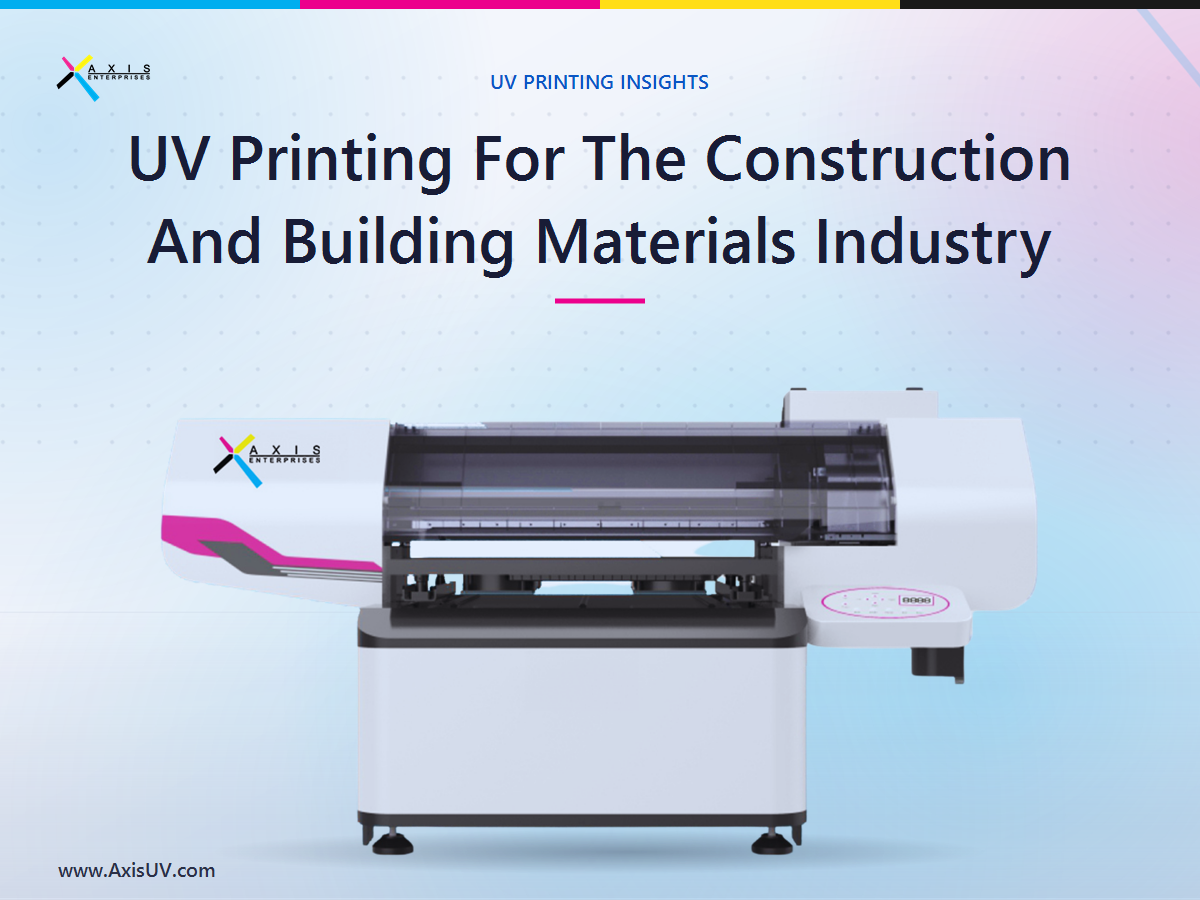
UV printing lets construction and building-materials businesses print logos, product data, decorative patterns and branding directly onto panels, laminates, tiles, doors, uPVC and aluminium profiles, pipes, fittings, hardware and site signage, with no stickers and no screens. A flatbed machine jets ink that is hardened instantly by ultraviolet light, so it bonds to rigid and uneven surfaces that normal printers cannot handle. For an Indian manufacturer or print shop, bringing this capability in-house can cut outsourcing cost, shorten turnaround and open higher-margin customised product lines. The opportunity is large: India’s building-materials market was about US100 billion by 2030, according to a report by investment bank Avendus Capital.
Why is the building-materials market suddenly worth paying attention to?
Because it is close to doubling in five years. India’s building-materials market, worth about US100 billion by 2030 on a 10 to 12 percent compound annual growth rate, according to a report by investment bank Avendus Capital, reported by news agency IANS.
That growth is spread across exactly the product categories that get decorated, branded or surface-finished. India’s paints and coatings market alone was around US16.38 billion by 2030, while tiles and bathware were about US19.3 billion by 2030, and wood panels around US$6.2 billion in FY25, as compiled by the India Brand Equity Foundation (IBEF).
The demand driver underneath all of this is urbanisation. The United Nations projects that about 38 percent of India’s population will live in urban areas by 2030, as cited by IBEF, which means more homes, offices, retail space and the branded, finished building products that fill them.
Why do most building-products makers quietly leak margin?
Most of them still buy their branding and decoration from someone else. Laminate makers, door and window fabricators, tile and sanitaryware brands, uPVC and pipe manufacturers, hardware and fittings suppliers and modular-furniture units routinely outsource their logos, product codes, decor patterns and point-of-sale displays to screen printers, pad printers, sticker vendors and offset label houses.
Outsourcing looks cheap per piece and is expensive per year. You pay a margin on every unit, you wait on a vendor’s queue, you accept their minimum order quantity, and you cannot run a short custom batch without it becoming uneconomical. Stickers peel, screen setups are slow to change, and every design revision means another trip to the vendor.
The deeper cost is lost business. When a builder, architect or large retail buyer asks for a customised finish, a co-branded panel or a small trial run, the manufacturer who has to outsource it often says no, and the order goes to a competitor who can say yes the same week.
What does this mean for a small Indian manufacturer or print shop?
It means the margin you are handing to print vendors is money you could keep. Micro, small and medium enterprises are the backbone of exactly this kind of manufacturing: the Ministry of Micro, Small and Medium Enterprises reported that MSME Gross Value Added was 30.1 percent of India’s GDP in 2022-23, and that MSME-specified products made up 45.73 percent of India’s exports in 2023-24, according to the Press Information Bureau.
For an owner running 30 to 5,000 people, in-house decoration changes the economics in three ways. You stop paying an outside margin on every branded unit, you cut turnaround from days to hours, and you can quote jobs your competitors decline, including single customised pieces and short premium runs.
There is also a tax and cash point that favours buying. A printer is a capital asset, so the Goods and Services Tax paid on the machine is normally available to a registered business as input tax credit, and the equipment can be depreciated, which softens the real cost of ownership well below the sticker price in rupees.
What exactly is UV printing, and why does it suit building materials?
UV printing is inkjet printing that uses ink hardened by ultraviolet light instead of heat or air drying. A print head lays down droplets of ink, and a UV lamp instantly cures them into a solid, scratch-resistant layer through a process called UV curing, so the print is dry and handleable the moment it leaves the head.
That instant curing is the reason it fits construction products so well. Because the ink sets on contact rather than soaking in, a flatbed UV machine can print on almost any rigid or awkward building material: acrylic, wood and MDF, aluminium composite panels, glass, ceramic tile, metal, laminate, uPVC and more. It prints directly on the finished product, so there is no sticker to peel and no separate label to apply.
The category is growing globally, not just in India. The Business Research Company reports that the global UV inkjet printing market reached US92.82 billion by 2030. Within India, the broader digital printing market was about US2.94 billion by 2034, a 7.64 percent compound annual growth rate, according to the IMARC Group.
How should a smart buyer think about choosing a machine?
Stop comparing machines on headline price alone, and compare them on what they will let you produce and keep producing. The questions that actually protect your investment are about substrate range, finish quality, bed size, support and total cost of ownership, not just the number on the quotation.
The table below reframes the common buying mistakes into the criteria that matter for a building-materials workshop.
What to look for in a flatbed UV printer for construction products
- Proven substrate range. It should be demonstrated on your real materials, with the correct primer and ink profile, not just on a sample acrylic sheet.
- White ink and varnish capability. This is what separates a premium branded panel from a flat, cheap-looking print.
- A bed and clearance that fit your products. Doors, large laminate sheets and thick panels need both size and height clearance.
- Reliable adhesion on difficult surfaces. Ask how the machine and primers handle glass, metal and coated panels that reject ordinary ink.
- Local service and spares. Fast on-site support and in-country spare parts keep a production line running.
- A clear view of running cost. Ink consumption, lamp life and maintenance decide your true cost per print.
A better way forward
If you make or sell building products and you are still outsourcing your branding and decoration, a flatbed UV printer is the asset that brings that margin back in-house. Axis Enterprises builds and supplies flatbed UV printing machines for Indian manufacturers, signage makers, interior brands and print businesses, and the team at uvprinterindia.com helps owners work out which configuration fits their materials and volume before they commit a rupee. You can explore flatbed UV printing machines built for Indian manufacturers and see how they handle the exact panels, tiles and profiles you produce.
The right starting point is not the machine, it is your own numbers. Add up what you pay outside vendors every month for branding, decoration, labels and signage, then look at how much of that a single in-house machine would absorb. If you would like help running that comparison for your product mix, you can talk to the team at Axis Enterprises and ask for a plain-English breakdown of substrates, finishes and running cost for your workshop.
Next step
If bringing UV printing in-house could change the margin on your building products, the lowest-risk first move is a short conversation about your materials and monthly volumes, with no obligation to buy. You can book a free UV printing machine buying consultation and get a straight answer on whether a flatbed UV printer fits your business, or request a sample print on your own material so you can judge the quality on the products you actually sell.
Frequently asked questions
Can a UV printer print directly on laminates, doors, tiles and ACP panels?
Yes. A flatbed UV printer prints directly onto rigid building materials including laminates, wooden and MDF doors, ceramic tiles, aluminium composite panels, glass, metal and uPVC profiles. The ink is cured by ultraviolet light the instant it is laid down, so it bonds to the surface instead of needing a separate sticker or label.
Is UV printing durable enough for construction and building products?
UV-cured ink forms a hard, scratch-resistant layer that holds up far better than a sticker or a short-run screen print. Durability still depends on the right primer, ink profile and surface preparation for each material, which is why buyers should see the print tested on their own substrate, and why outdoor products may need specific weather-resistant inks and coatings.
Should a building-materials manufacturer buy a UV printer or keep outsourcing?
The deciding factor is your monthly outsourcing spend on branding, decoration, labels and signage. If that figure is significant and recurring, an in-house flatbed UV printer usually pays back by removing the outside margin on every unit, cutting turnaround and letting you accept custom and short-run jobs you currently decline. Audit three months of print and decoration invoices before deciding.
What does a flatbed UV printer cost in India, and how is GST handled?
Price depends on bed size, print heads, speed and white-ink capability, so the right number comes from a specification matched to your products rather than a generic figure. Because the machine is a business capital asset, the Goods and Services Tax paid on it is normally available to a registered buyer as input tax credit, and the equipment can be depreciated, which lowers the effective cost of ownership.
Which building materials can one flatbed UV printer handle?
A single flatbed UV printer can typically print across acrylic, wood, MDF, glass, ceramic tile, metal, aluminium composite panels, laminate, PVC and uPVC, provided each material is tested with the correct primer and ink profile. This versatility is the main reason a building-products maker can replace several outsourced processes with one in-house machine.
Sources
- Avendus Capital report, via IANS: India’s building materials market likely to almost double to US$100 billion by 2030
- India Brand Equity Foundation (IBEF): Growth of decorative and construction materials in India’s real estate sector
- The Business Research Company: UV Inkjet Printing Global Market Report
- IMARC Group: India Digital Printing Market Size and Growth
- Press Information Bureau, Ministry of Micro, Small and Medium Enterprises: Contribution of MSMEs to the GDP
- Wikipedia: UV curing
- Wikipedia: Inkjet printing
- Wikipedia: Building material
- Wikipedia: Goods and Services Tax (India)
- Wikipedia: Total cost of ownership