
Published: September 2, 2026. Last updated: September 2, 2026.
Quick answer
UV printing is a digital, inkjet based process that cures ink instantly with ultraviolet light, letting a business print sharp, durable graphics, codes, and finishes directly onto pharmaceutical and medical packaging materials such as cartons, rigid boxes, plastic and metal device panels, and long-life labels. For Indian manufacturers and print shops, it supports short runs, fast artwork changes, and the QR code and barcode details now required on many medicine packs. It suits sample packs, prototypes, promotional health products, device panels, and low to medium volume label work, rather than high-speed mass production of blister strips.
Why the packaging on a medicine box matters more than most buyers think
Packaging in this sector is a patient-safety layer, not decoration. According to the World Health Organization, about 1 in 10 medical products in low and middle income countries is substandard or falsified, and the WHO estimates roughly US$30.5 billion is spent each year on these products.
The cost is human, not only financial. In a 2017 statement, WHO Director-General Dr Tedros Adhanom Ghebreyesus said, “Substandard and falsified medicines particularly affect the most vulnerable communities. This is unacceptable.”
Clear, hard-to-copy, machine-readable packaging is one of the front-line defences against this problem. That single fact is quietly reshaping what buyers of medical pharmaceutical packaging now demand from their print suppliers.
What market forces are reshaping medical packaging in India right now?
Demand is rising fast on both the medicine side and the device side, and regulation is tightening at the same time. As of 2025 the Indian pharmaceutical market is valued at roughly US$60 billion and, according to the India Brand Equity Foundation (IBEF), is projected to reach about US$130 billion by 2030.
The device side is growing even faster in percentage terms. IBEF reports that the India medical devices market is expected to expand from about US$15.2 billion in 2025 to US$50.1 billion by 2030, which means far more device housings, panels, and durable labels needing print.
Regulation is the accelerant. From 1 August 2023, India’s Central Drugs Standard Control Organisation required the top 300 drug brands to carry a barcode or QR code on the label, a rule the Government has signalled it intends to widen, as tracked by the Regulatory Affairs Professionals Society (RAPS). Every one of those codes has to be printed accurately and legibly, batch after batch.
What does this mean for small print shops and manufacturers?
It means the work is moving toward shorter runs, faster changes, and higher accountability, which is exactly where traditional plate-based printing struggles. The India print label market, tracked by Mordor Intelligence, is valued at about US$2.46 billion in 2025 and is forecast to grow at a 13.29% CAGR to US$4.59 billion by 2030, with growth driven by pressure for shorter runs, personalisation, and serialisation.
For a small or mid-size Indian business, the pain is practical. Setting up plates or screens for a 500-carton sample run or a frequently changing batch code destroys the margin.
Outsourcing every short job means slow turnaround, minimum-order penalties, and no control over quality on safety-critical packs. Owners feel squeezed between rising demand and processes that were built for long, unchanging runs.
Where does UV printing actually fit in pharmaceutical and medical work?
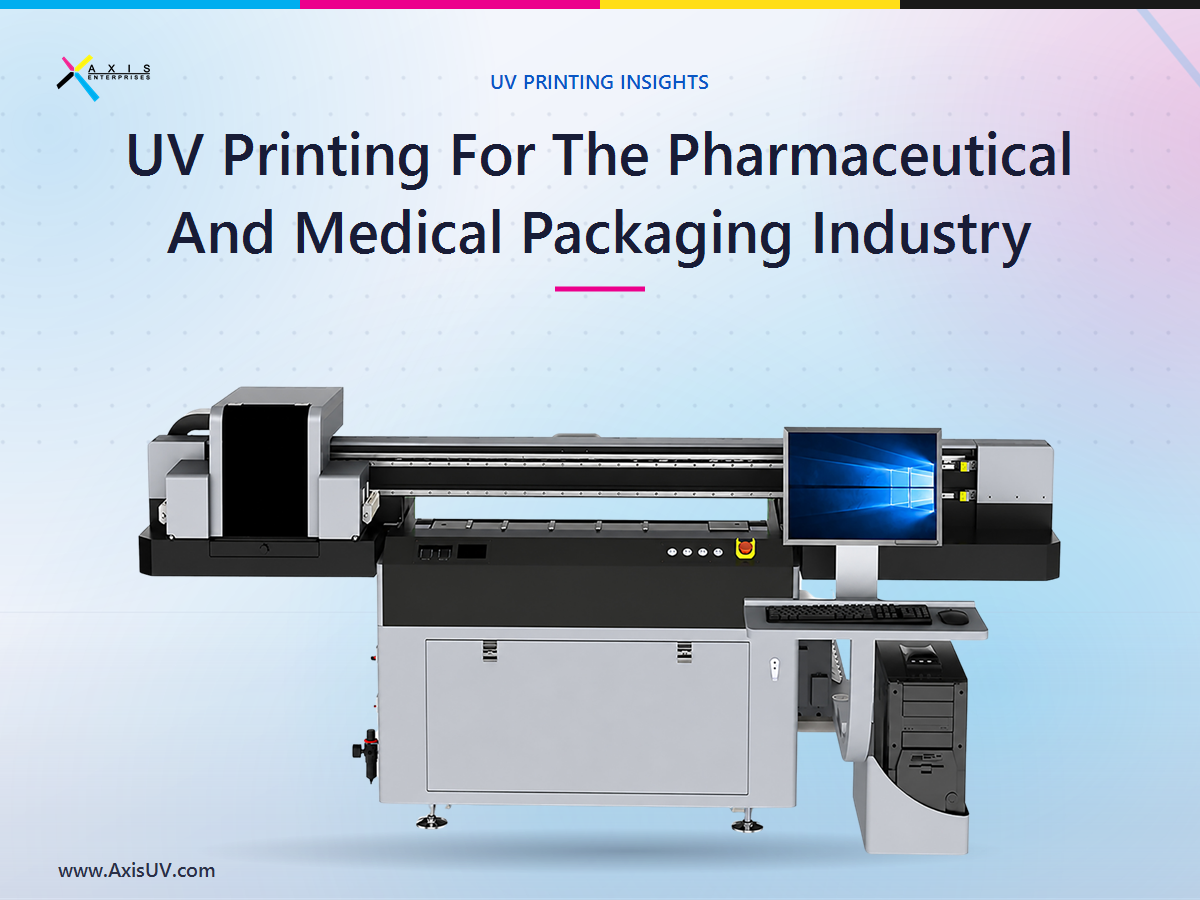
UV printing fits the short-run, variable, and rigid-surface parts of the job, not the high-speed mass production of primary blister foil. It is a digital process, so there are no plates or screens: artwork and batch data go straight from file to product, which makes late changes and small batches economical.
The “UV” refers to UV curing, where ultraviolet light hardens the ink the instant it is laid down by the inkjet heads. Because the ink cures rather than soaks in, it bonds to plastic, metal, glass, coated board, and acrylic, and it resists handling, alcohol wipes, and abrasion.
Realistic applications for an Indian SME include: secondary cartons and rigid boxes, sample and prototype packs, device housings and control panels, durable equipment nameplates and asset labels, tamper-evident and raised-texture security finishes, and printed QR code and barcode blocks on labels and panels. It also handles promotional and patient-awareness items that pharma brands hand out. These are exactly the areas where counterfeit-resistant, high-durability print adds real value.
What should a smart buyer look for in a UV printer for medical work?
Look past the headline price and judge the machine on the criteria that decide whether it can survive regulated, safety-critical work. The table below lists what matters and why.
Two of these deserve emphasis. Adhesion and cure quality decide whether a pack passes inspection, and after-sales support decides whether a small team can actually keep the machine productive.
A better way forward
Given everything above, the sensible move for an Indian business eyeing this sector is to match the machine to the real job: durable codes, short runs, rigid surfaces, and dependable uptime. This is the work Axis Enterprises focuses on at uvprinterindia.com, where the aim is to help owners choose a UV printing machine that fits their materials, volumes, and budget rather than oversell capacity they will not use.
If you are comparing options, you can explore the UV printing machine range at uvprinterindia.com and compare UV printer models suited to label and packaging work. Pricing is best assessed on a landed-cost basis, including GST and any import duties, so you see the true investment before deciding.
For a straight, no-jargon read on whether UV printing suits your specific packaging work, you can talk to the team at Axis Enterprises about your materials and order pattern.
Frequently asked questions
Can a UV printer print QR codes and barcodes for medicine packs?
Yes. UV printers print sharp, high-resolution QR codes and barcodes directly onto labels, cartons, and rigid panels, which supports the traceability details India requires on many drug packs. Verify scan accuracy on your exact material and finish before committing to a batch, because gloss and texture can affect readability.
Is UV printing suitable for primary drug packaging like blister strips?
Generally no. Primary blister foil and very high-volume medicine packs are still best suited to specialised high-speed pharma lines. UV printing is strongest for secondary cartons, sample and prototype packs, device panels, durable labels, and short or variable runs.
Why choose UV printing over screen or offset printing for this work?
UV printing is plate-free, so short runs and frequent artwork or batch-code changes cost far less to set up. It also cures instantly and bonds to plastic, metal, glass, and coated board, which suits the mixed, durable surfaces common in medical packaging and devices.
Does UV printing help against counterfeit medicines?
It can contribute. Crisp, hard-to-replicate graphics, serialised codes, and raised or textured security finishes make packs harder to copy and easier to verify. It is one layer of protection and works best alongside proper serialisation and supply-chain controls.
What does a UV printer cost for a small Indian business?
Costs vary widely by size, print heads, and brand, so the useful figure is the landed cost that includes GST, any import duties, inks, and service, not the sticker price. A short buying consultation focused on your materials and volumes gives a far more accurate number than a generic range.
Next step
If you are weighing whether UV printing belongs in your pharmaceutical or medical packaging workflow, the most useful first move is a short, no-pressure conversation about your materials, order sizes, and budget. You can book a free UV Printing Machine Buying Consultation at uvprinterindia.com, and get a clear, honest view of what the right machine can and cannot do for your business before you invest.
Sources
- World Health Organization, Substandard and falsified medical products (fact sheet)
- World Health Organization, 1 in 10 medical products in developing countries is substandard or falsified (2017)
- India Brand Equity Foundation (IBEF), Pharmaceutical Industry in India
- India Brand Equity Foundation (IBEF), Medical Devices Industry in India
- Regulatory Affairs Professionals Society (RAPS), India expands mandatory use of QR codes for traceability
- Mordor Intelligence, India Print Label Market