
Published: August 2, 2026
Quick answer: is in-house UV printing worth it for wayfinding and directional signage?
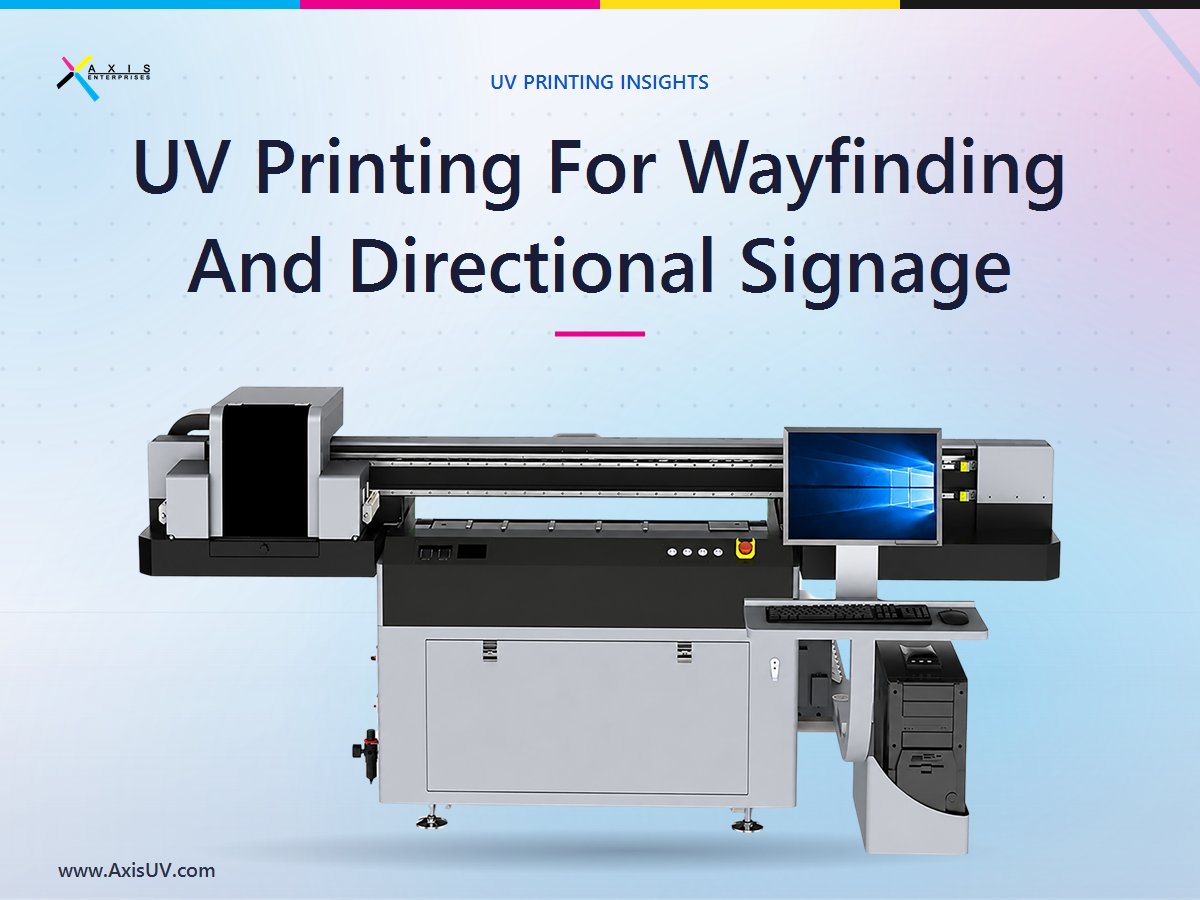
Yes, for most sign and print businesses handling steady wayfinding work. Wayfinding and directional signage (the door plates, floor arrows, zone maps, and room signs that guide people through a building) demands short runs, many substrates, and fast turnarounds, which is exactly where outsourcing bleeds margin and time. A UV printer prints full color directly onto acrylic, aluminium composite panel, foam board, wood, and metal, adds raised tactile detail in a single pass, and cures instantly, so a job that took days through a vendor can ship the same day. The payoff is control over quality, margin, and deadlines rather than a single dramatic cost cut.
Why is wayfinding signage suddenly a bigger opportunity?
Wayfinding is one of the most durable, recession-resistant slices of the sign market because every new building, hospital, campus, metro station, mall, and office fitout needs it by law and by design. The global wayfinding signs market was valued at roughly USD 12.5 billion in 2025 and is projected to grow at about 5.8% a year through 2035, according to IndexBox market research.
In India specifically, demand is being pulled forward by public infrastructure. The Press Information Bureau reported that under the Smart Cities Mission, about 7,555 projects worth roughly INR 1,51,361 crore (94% of the sanctioned total) had been completed by May 2025, per the Press Information Bureau. Metros, transit hubs, and civic buildings all ship with directional and identification signage packages.
The broader signage category is climbing with it. India’s signage market is expanding at a compound annual growth rate of around 7.6% over 2025 to 2031, according to 6Wresearch. The buyers commissioning this work are the same small and mid-sized enterprises that anchor the economy: the Ministry of MSME told the Press Information Bureau that the MSME sector contributes 30.1% of India’s GDP and 45.73% of exports.
What is quietly draining margin from most sign shops today?
The hidden cost is not the sign itself, it is the dependence on outside vendors for the finishing that makes wayfinding profitable. When a hospital orders 60 room signs in three sizes, two colors, and a braille requirement, a shop that outsources printing loses the deadline, the markup, and often the repeat order.
Three forces make this worse for wayfinding than for ordinary print work:
- Short, varied runs. Wayfinding is rarely 1,000 identical pieces. It is 12 of these, 30 of those, and a one-off lobby directory, so per-piece outsourcing costs stay high and setup fees repeat.
- Many substrates. One project can span acrylic room signs, ACP directory boards, foam-board temporary signs, and metal exterior plates. Sending each to a different vendor multiplies coordination and delay.
- Compliance and revisions. Room numbers change, tenants move, departments rename. Every revision is a fresh outsourced order at full price when you do not own the machine.
Digital display work is growing even faster and raising client expectations for speed. India’s digital signage market reached USD 940.5 million in 2024 and is forecast to hit USD 3,415.0 million by 2033 at a 14.25% CAGR, according to the IMARC Group. Clients who see instant digital updates expect printed wayfinding to move at a similar pace.
Why does UV printing fit wayfinding better than older methods?
UV printing suits wayfinding because it prints directly onto rigid materials and cures the ink instantly with ultraviolet light, removing the drying, laminating, and mounting steps that slow other methods. In inkjet printing of the UV type, the ink is a liquid that hardens the moment it passes under a UV lamp, a process called UV curing.
That single property changes the economics of directional signage in four ways:
- Direct-to-substrate. No printing on vinyl and then applying it. Color goes straight onto the acrylic, metal, or panel, so signs look sharper and last longer.
- Instant cure. Prints are dry and handleable as they leave the machine, so same-day dispatch becomes normal rather than heroic.
- Raised and tactile detail. UV printers can lay down thicker ink to build braille dots and raised text, useful for accessible signage that older flatbed methods could not produce in one pass.
- Outdoor durability. Cured UV inks resist fading and abrasion, which matters for exterior directional plates exposed to sun and handling.
This is why the equipment category itself is expanding. The global UV inkjet printing market was estimated at about USD 50.61 billion in 2024, per Data Bridge Market Research, and independent coverage of the UV printers market by Mordor Intelligence tracks steady growth driven by short-run, on-demand production.
How should a smart buyer judge a UV printer for signage work?
Judge the machine on its fit for real wayfinding jobs, not on headline print speed. A directional-signage workflow lives or dies on substrate range, white and varnish ink, print head quality, and the true running cost, so weigh those before price.
Use these criteria as a scorecard when you compare machines:
That last line deserves weight. The honest comparison between machines is total cost of ownership, which folds ink yield, maintenance, and part life into the sticker price. A cheaper printer with thirsty ink and short head life can cost more across three years than a dearer, better-built one.
What should you look for before you buy?
Look for a supplier who sells you a working signage operation, not just a box. The machine is one purchase; the outcome depends on training, support, and honest numbers around it.
- A printer proven on rigid signage substrates, with real samples on acrylic, ACP, and metal.
- White and varnish capability so you can quote accessible and premium signage, not only flat color.
- Transparent running-cost figures per print, including ink and maintenance, in Indian conditions.
- Clear pricing that separates the machine, ink, and any accessories, with Goods and Services Tax (India) stated openly so your landed cost and input-tax credit are predictable.
- Installation, operator training, and responsive after-sales service within India, so downtime does not become lost orders.
- A demo on your own files and materials before you commit.
A better way to bring wayfinding work in-house
Once you have judged machines on those criteria, the practical next step is a guided comparison rather than a cold purchase. At uvprinterindia.com, Axis Enterprises helps sign shops, print service providers, and manufacturers match a UV printing machine to the exact wayfinding and directional signage work they intend to win.
The approach is consultative. You can book a free UV printing machine buying consultation, share the substrates and run sizes you actually handle, and get a straight read on which flatbed or hybrid configuration fits. If you are weighing white-ink and varnish needs for accessible signage, you can talk through the right print configuration before spending a rupee, and request a sample print on your own material to see the finish for yourself.
Frequently asked questions
Can a UV flatbed printer produce raised or tactile accessible signage?
Yes. UV printers can deposit thicker layers of ink and varnish to build raised text and braille-style dots in the same pass as the color graphics. This lets one machine produce both standard directional signs and accessible signage without a separate embossing step.
What materials can I print wayfinding signs on with a UV printer?
A UV flatbed prints directly on rigid materials including acrylic, aluminium composite panel, foam board, wood, glass, and coated metal. That range covers most interior room signs, directory boards, and exterior directional plates from a single machine.
Is printing wayfinding signage in-house really cheaper than outsourcing?
For shops with steady, varied signage volume, usually yes, because you capture the print markup and setup fees you currently pay a vendor on every short run and revision. The saving is strongest on the small batches and frequent reprints that define wayfinding, and it depends on your run volume and the machine’s running cost, so model your own numbers before buying.
What is the difference between UV printing and ordinary digital printing for signs?
Ordinary digital printing usually prints on vinyl or paper that is then laminated and applied to a board, while UV printing jets ink straight onto the rigid board and cures it instantly with UV light. That removes application and drying steps, improves durability, and lets you print on materials vinyl workflows cannot handle directly.
How long do UV-printed directional signs last outdoors?
Cured UV inks are designed to resist fading, moisture, and abrasion, which makes them suitable for exterior directional and identification signs. Actual lifespan depends on the substrate, ink, coating, and sun exposure, so ask any supplier for durability data on the specific materials you plan to use.
Next step
If wayfinding and directional signage is already part of your order book, or you keep turning it away because outsourcing kills the deadline, the fastest way to test the numbers is to compare a machine against your own real jobs. Bring your substrates, your run sizes, and your toughest revision-heavy client, and see what an in-house UV printing machine would do to your turnaround and your margin. You can start that conversation and book a free UV printing machine buying consultation whenever you are ready.
Sources
- IndexBox, Wayfinding Signs Market Forecast
- 6Wresearch, Signage Market Size in India
- IMARC Group, India Digital Signage Market
- Data Bridge Market Research, Global UV Inkjet Printing Market
- Mordor Intelligence, UV Printers Market
- Press Information Bureau, 10 Years of Smart Cities Mission
- Press Information Bureau, MSME Sector GDP And Export Share