
Quick answer
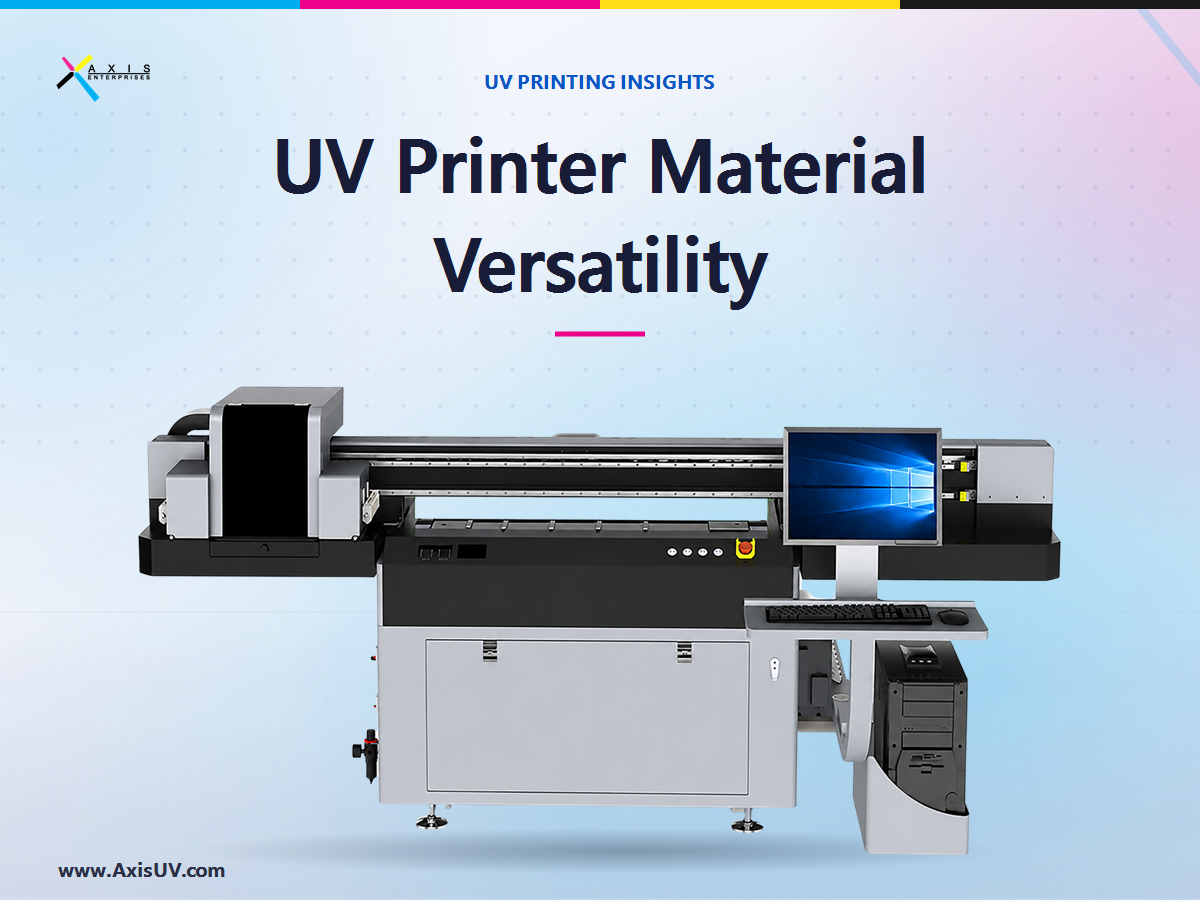
A UV flatbed printer prints directly onto almost any flat or slightly contoured surface, rigid or thin, without pre-treatment, because it cures ink instantly with UV light instead of soaking it into the material. In practice that means one machine can print full colour, and often a raised or textured finish, on acrylic, glass, wood, MDF, metal, aluminium composite panels, ceramic and tiles, leather, PVC and foam board, corrugated and rigid packaging, phone cases and other moulded plastic products, pens, bottles, and many finished goods. Because the ink is cured (hardened) the moment it is laid down, colours stay sharp and adhesion holds on surfaces that traditional inkjet or screen printing struggle with. For a print, signage, gifting, or product business, the real value is not a single material. It is range: the more substrates you can say yes to, the more premium, no-minimum orders you can take in-house instead of turning them away or sending them out. When you evaluate a machine, judge it on the breadth of materials it prints well, the ink system (including white and varnish), the usable bed size, and the service and training behind it, not on the lowest quoted price.
The market is rewarding businesses that can print on more surfaces
Demand for printed, branded, and personalised products in India is growing far faster than most shops can currently supply it. The India custom printing market generated about ₹20,000 crore of revenue in 2024 (USD 2,451.8 million) and is projected to reach roughly USD 4,790.4 million by 2030, a compound annual growth rate of about 11.8 percent, according to Grand View Research. India already accounts for about 6.4 percent of the global custom printing market.
The short-run, personalised end of that market is moving even faster. The India print-on-demand market generated about USD 592.3 million in 2023 and is forecast to reach about USD 3,882.1 million by 2030, a compound annual growth rate near 30.8 percent, again per Grand View Research. Globally, the UV flatbed printer category itself was valued at about USD 1.8 billion in 2025 and is projected to reach about USD 3.6 billion by 2034, with Asia Pacific already the largest region at about USD 691 million, or 38.4 percent of 2025 revenue.
Here is the part that matters for an owner. The growth is concentrated in exactly the work that needs surface flexibility: one customer wants a name engraved-look print on an acrylic award, the next wants ten wooden coasters, the next wants a logo on a metal sign, a leather diary, or a batch of phone cases. The business that can print all of those on one machine captures the order. The business that can only print on a couple of materials watches it walk out.
Why “what can it print on” is the wrong first question, and the right one
Most buyers start by asking whether a machine can print on one material they have in mind today. That is the wrong first question, because it locks you into a narrow purchase for a market that keeps widening. The better question is: how many of the surfaces my customers might ask for can this machine print on well, over the next three to five years?
UV flatbed printing earns its place here for a simple technical reason. Conventional printing methods are built around a narrow set of materials: screen printing needs setup and minimums per design, and standard inkjet relies on ink being absorbed, which limits it to paper and coated stock. A UV flatbed printer instead lays ink on top of the surface and cures it instantly with ultraviolet light. That single difference is why the same machine can move from glass to wood to metal to plastic without the material soaking, smudging, or rejecting the ink.
The material range that actually expands your revenue
Rather than memorise a list, think in categories of work, because each category is a set of customers you can newly serve:
- Signage and display: acrylic, aluminium composite panels, foam board, PVC, and glass for retail, office, and event signage.
- Interior and decor: wood, MDF, laminates, ceramic tiles, and glass for wall art, nameplates, and customised panels.
- Gifting and personalisation: phone cases, pens, bottles, keychains, photo frames, leather diaries, and awards, usually in small, high-margin batches.
- Packaging and product branding: rigid boxes, corrugated samples, and direct printing onto finished products a manufacturer already makes.
- Industrial and label: metal panels, control plates, and durable identification prints that need to survive handling and weather.
Two capabilities decide whether a machine handles this range or only pretends to. The first is white ink, which lets you print bright, opaque colour on dark, coloured, or transparent materials such as black acrylic or clear glass. Without it, half of the gifting and signage market is closed to you. The second is a varnish or gloss layer and textured (embossed) printing, which turns a flat print into a premium finish customers will pay more for.
What this means for your business, specifically
If you run a signage shop, a printing business, a corporate gifting brand, a furniture or interior studio, a packaging unit, or a small manufacturing operation that brands its own products, limited material capability shows up as lost money in familiar ways:
- You decline or outsource the premium one-off order (an acrylic award, a leather portfolio, a printed metal sign) because your current setup cannot print that surface, and the margin goes to someone else.
- You compete on price for the narrow band of materials you can handle, instead of competing on range where margins are higher.
- You miss the personalisation premium your customers are ready to pay. Deloitte research found that about one in five consumers is very willing to pay a premium for a personalised product, and about half believe customised products make ideal gifts. That premium only reaches you if you can actually print the item they want.
This pressure lands hardest on the exact businesses driving India’s growth. Micro, small, and medium enterprises contribute about 30.1 percent of India’s GDP and 35.4 percent of manufacturing output, according to the Ministry of MSME. For an owner-run firm, every job you cannot produce in-house is margin handed to a vendor, on demand that is rising every year.
What smart buyers should look for
When material versatility is the goal, judge a UV flatbed printer on these points rather than the sticker price:
- Proven range, not claims: ask for live samples on the specific materials you sell most, printed in front of you, not a brochure gallery.
- A complete ink system: CMYK plus white plus varnish, so you can print on dark, clear, and textured surfaces and offer premium finishes.
- Adhesion and durability: confirm the print resists scratching and handling on hard surfaces such as glass and metal, ideally with a primer option for difficult substrates.
- Usable bed size and height clearance: enough flat area for your common jobs and enough clearance to print on thicker products, not just sheets.
- Service, spares, and operator training: a versatile machine is only useful when it runs, so local support, spare-part availability, and hands-on training decide your real uptime.
- GST-aware costing: a UV printer bought for business use is a capital asset on which input tax credit is generally available, subject to conditions, which lowers the effective cost of expanding your capability.
A better way forward
Once you frame the decision around range rather than a single material, the goal becomes clear: own one reliable machine that lets you say yes to the widest set of profitable jobs. That is exactly what Axis Enterprises builds at uvprinterindia.com. Our UV flatbed printers are chosen to print across acrylic, glass, wood, metal, leather, PVC, packaging, and finished products, with white ink and varnish for premium finishes, and they are backed by service, spares, and training so the capability keeps earning long after installation.
Frequently asked questions
Can a UV flatbed printer print on both rigid and thin materials?
Yes. Because the ink sits on top of the surface and is cured by UV light rather than absorbed, a flatbed can print on thin sheets such as PVC and foam board as well as rigid items such as acrylic, wood, glass, metal, and tiles, as long as the item fits the bed size and height clearance.
Do I need white ink to print on dark or transparent surfaces?
In most cases, yes. White ink lays down an opaque base so colours stay bright on black acrylic, coloured wood, or clear glass. Without white ink, printing on dark or transparent materials looks dull or disappears, which closes off a large part of the signage and gifting market.
Is UV flatbed printing durable enough for signage and industrial use?
UV-cured ink hardens on contact and generally resists scratching, moisture, and handling better than absorbed inkjet ink, which is why it suits signage, nameplates, and industrial identification. For very smooth surfaces such as glass and metal, a primer or adhesion promoter further improves durability.
Will one UV printer really let me stop outsourcing across so many materials?
For most print, signage, gifting, and product businesses, a single versatile UV flatbed printer covers the majority of repeat jobs across common substrates, which is where outsourcing quietly drains margin. Specialised or very high-volume work may still be shared out, but the bulk of everyday orders can move in-house.
Is a UV flatbed printer a sensible investment for a small Indian business?
It can be, when your repeat demand across materials is real. Custom and personalised printing is growing at double-digit rates in India, personalised products command a price premium, and the machine is a capital asset that generally qualifies for GST input tax credit. The right test is whether the range of jobs you can newly accept pays back the machine within a comfortable period.
Next step
If you are weighing whether one machine can cover the materials your customers keep asking for, do not guess from a spec sheet. Book a free UV Printing Machine Buying Consultation at uvprinterindia.com, tell us the surfaces and products you sell most, and we will show you exactly what is possible and what to look for before you invest.
Sources
- Grand View Research, India Custom Printing Market Size & Outlook, 2025 to 2030.
- Grand View Research, India Print On Demand Market Size & Outlook, to 2030.
- Industry market-research reports on the global UV flatbed printer market, size and forecast to 2034.
- Deloitte Digital, consumer personalisation research on willingness to pay a premium for personalised products.
- Ministry of MSME, Government of India (Press Information Bureau), MSME contribution to GDP, manufacturing, and exports.