
Published: July 24, 2026
Quick answer
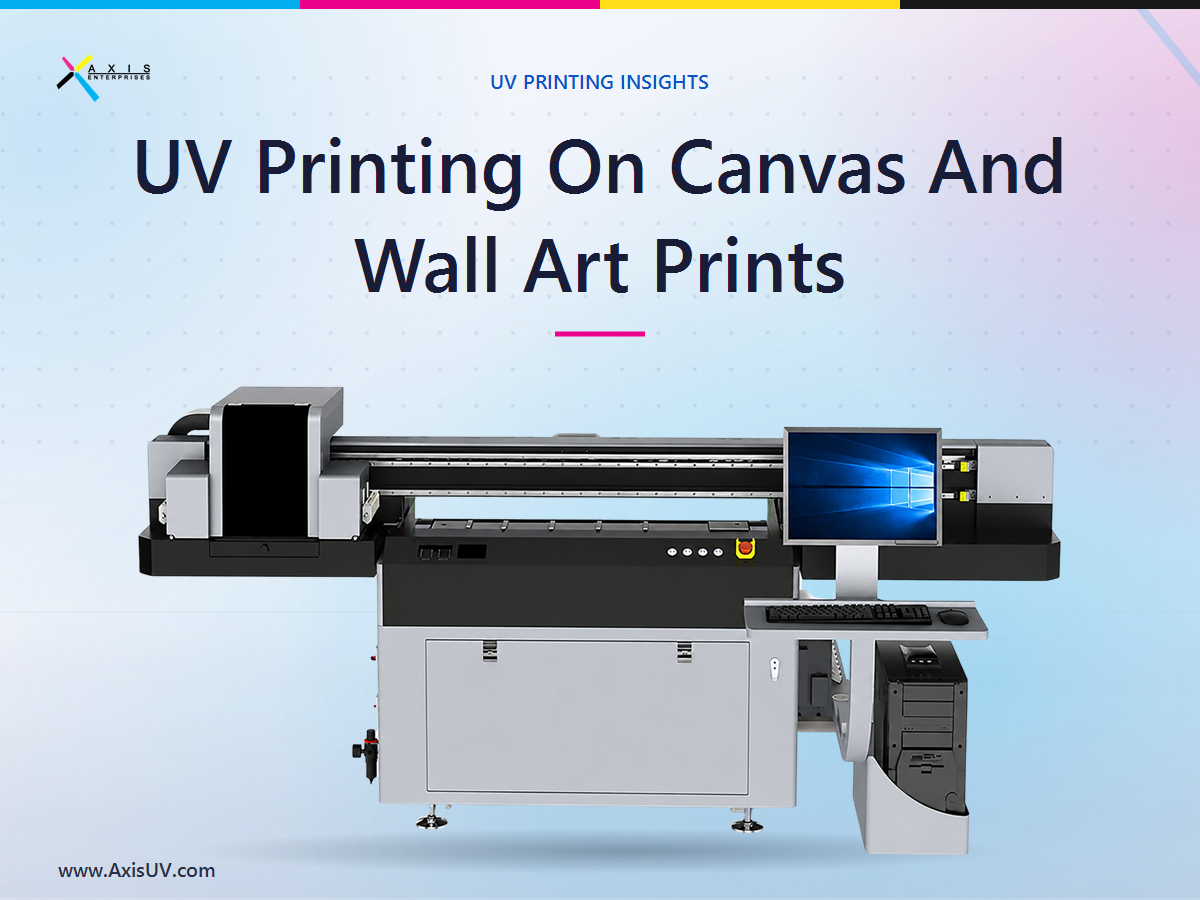
UV printing lets a print or decor business produce canvas panels, framed prints, and rigid wall art in-house, on demand, and in single quantities, without outsourcing. A UV printer cures ink instantly with ultraviolet light, so it prints directly onto canvas, wood, acrylic, foam board, and metal with scratch and water resistance. For Indian SMBs, that means faster turnaround, tighter quality control, and higher margins on a personalized product category that buyers increasingly want. The main decision is not whether wall art sells, it is which UV printer type, print head, and ink system match your product mix and volume. This guide explains what the market data shows and what smart buyers check before purchase.
Why is wall art quietly becoming a high-margin category?
Wall art is riding two large, growing markets at once: home decor and personalized products. According to IMARC Group, the India home decor market was valued at about USD 26.88 billion in 2025 and is projected to reach roughly USD 42.36 billion by 2034, a compound annual growth rate of 5.18 percent.
Wall decor is a distinct slice inside that. Research firm Mordor Intelligence valued the India wall decor market at about USD 8.33 billion in 2025, growing toward roughly USD 10.17 billion by 2031. The same report notes online retailers held 41.12 percent of that market in 2025.
The pull is personalization. Buyers now want their own photos, names, and designs on the wall, not generic posters. That shift is why on-demand printing keeps growing while mass-produced decor stalls.
What does the printing market data actually say?
The technology behind this category is expanding faster than decor itself. Data Bridge Market Research estimated the global UV inkjet printing market at about USD 50.61 billion in 2024, growing at a compound annual growth rate of 7.1 percent through 2032.
The machine segment is growing even quicker. Future Market Insights put the UV LED printers market at about USD 477.65 million in 2025 and projected it to reach roughly USD 1,070.05 million by 2035, a compound annual growth rate of 8.4 percent, driven by personalized and on-demand printing.
Read together, the signal is clear: demand for customized wall art is rising, and the equipment to produce it profitably is becoming more capable and more energy efficient every year.
Where do most print and decor shops leak margin?
Most shops leak margin by outsourcing every canvas or framed print to a larger printer. Each outsourced job carries a markup, a minimum order quantity, and a courier delay, so a single custom photo canvas becomes slow and barely profitable.
Outsourcing also removes control. When a customer wants a colour tweak or a reprint, you wait on a third party, and the delay costs you the sale or the repeat order. In a personalization business, speed and control are the product.
This matters at national scale because these shops are the backbone of the economy. Per the Press Information Bureau, India’s MSME sector accounts for 30.1 percent of GDP, 35.4 percent of manufacturing, and 45.73 percent of exports. Thousands of these units are small print, gift, and decor businesses competing on turnaround and finish.
What does this mean for a small print or decor shop specifically?
For a small shop, the practical pain is simple: you turn away or lose money on the exact jobs customers ask for most. A single framed photo, a nameplate for a new home, one acrylic wall piece for a cafe: these are high-intent, high-margin orders that outsourcing makes uneconomic.
The demand is real and repeat-driven. India’s online gifting market, which leans heavily on personalized items, was valued at about USD 300 million in 2024 and is projected to grow toward USD 398.3 million by 2033, per IMARC Group. Photo canvas and framed prints sit squarely inside that gifting demand.
Bringing production in-house flips the equation. You capture the full margin, you set your own minimum order (one unit), and you turn same-day requests into confirmed sales.
How does UV printing on canvas and wall art actually work?
UV printing jets ink onto the surface and cures it instantly with ultraviolet light instead of letting it soak and air dry. This process, known as UV curing, hardens the ink on contact, so the print resists scratches, water, and fading better than conventional inkjet printing.
Because the ink sits on top and cures immediately, a UV printer handles many surfaces from one machine: cotton and poly canvas, wood, MDF, acrylic, glass, foam board, and metal. That versatility is what makes wall art profitable, because one printer serves canvas, framed prints, and rigid panels.
Two features raise the finish. White ink lets you print bright images on dark or clear materials, and varnish or gloss layers add depth and a gallery feel. Some UV printers can also build a raised texture, so a canvas print mimics real brush strokes.
What should a smart buyer look for in a UV printer for wall art?
A smart buyer matches the machine to the product mix rather than chasing the lowest price. The right UV printer for wall art balances print size, head quality, ink options, and running cost, and evaluating on total cost of ownership matters more than the sticker price.
Use this checklist when comparing machines:
- Print area and object height: a flatbed that fits your largest canvas or framed panel, with enough clearance for thick stretcher bars and rigid boards.
- Print head quality: a reliable, widely serviced head that delivers fine detail and consistent colour across a full canvas.
- White ink and varnish: essential for prints on dark canvas, acrylic, and metal, and for a premium gloss finish.
- Colour accuracy and calibration: profiles that keep skin tones and brand colours faithful, so photo canvases match the customer’s file.
- Running cost and cost per print: ink usage, head life, and maintenance per unit, calculated across a realistic monthly volume.
- Local service and support: fast access to spares, inks, and trained technicians, because downtime kills a same-day promise.
How does UV printing compare with other methods for wall art?
For rigid and mixed-material wall art, UV printing is usually the most flexible single-machine option. The table below compares common methods on the factors that decide profit on custom, low-volume orders.
The key advantage is that UV covers the widest material range from one device, which is exactly what a personalization-driven wall art business needs.
A better way forward
Once the buying criteria above are clear, the next step is matching them to real machines and real inks for the Indian market. That is the work we do at Axis Enterprises through uvprinterindia.com, where the focus is helping print and decor businesses choose the right UV printer for their exact product mix.
If canvas and wall art are your target, you can explore UV flatbed printer options suited to framed prints and rigid panels, and weigh white ink, varnish, and print-size choices against your monthly volume. The goal is a machine sized to your work, not an oversized purchase you never fully use.
Buying decisions in India also carry a tax dimension. Registered businesses can often claim input credit under the Goods and Services Tax (India) framework on qualifying equipment, so it is worth reviewing the GST treatment with your accountant before you finalize a purchase.
Next step
If you are weighing a first UV printer or upgrading to bring wall art production in-house, start with a short, no-pressure conversation about your product mix and volume. You can book a free UV printing machine buying consultation with the Axis Enterprises team, or compare UV printer models on uvprinterindia.com at your own pace. Bring your typical order sizes and materials, and you will leave with a clear, honest view of which machine fits and which does not.
Frequently asked questions
Can a UV printer print directly on canvas?
Yes. A UV flatbed printer prints directly onto stretched or flat canvas and cures the ink instantly, so no coating or lamination step is needed. The result resists scratches and water, which suits framed and gallery-wrapped wall art.
Do I need white ink for wall art?
You need white ink whenever you print on dark, coloured, clear, or metallic surfaces such as black canvas, acrylic, or metal panels. White ink lays down an opaque base so colours stay bright, and it is one of the most useful options for a decor product range.
Is UV printing better than outsourcing canvas prints?
For custom and low-volume orders, in-house UV printing is usually more profitable because it removes supplier markups, minimum order quantities, and courier delays. You capture the full margin and can fulfil single-piece and same-day requests that outsourcing makes uneconomic.
What materials can one UV flatbed printer handle?
A single UV flatbed typically prints on canvas, wood, MDF, acrylic, glass, foam board, and metal. This range lets one machine serve canvas art, framed prints, nameplates, and rigid signage, which spreads the investment across several revenue streams.
How do I choose the right UV printer size for wall art?
Match the print area and object-height clearance to your largest common product, then confirm the head quality, ink options, and cost per print at your expected monthly volume. Buying slightly above your current largest job is sensible, but avoid paying for a bed far larger than you will ever use.
Sources
- IMARC Group: India Home Decor Market
- Mordor Intelligence: India Wall Decor Market
- Data Bridge Market Research: Global UV Inkjet Printing Market
- Future Market Insights: UV LED Printers Market
- IMARC Group: India Online Gifting Market
- Press Information Bureau: MSME Contribution to GDP, Manufacturing and Exports